Local anaesthetic is generally used to numb the treatment area. Some pressure may be felt during treatment, and temporary discomfort can occur afterwards.

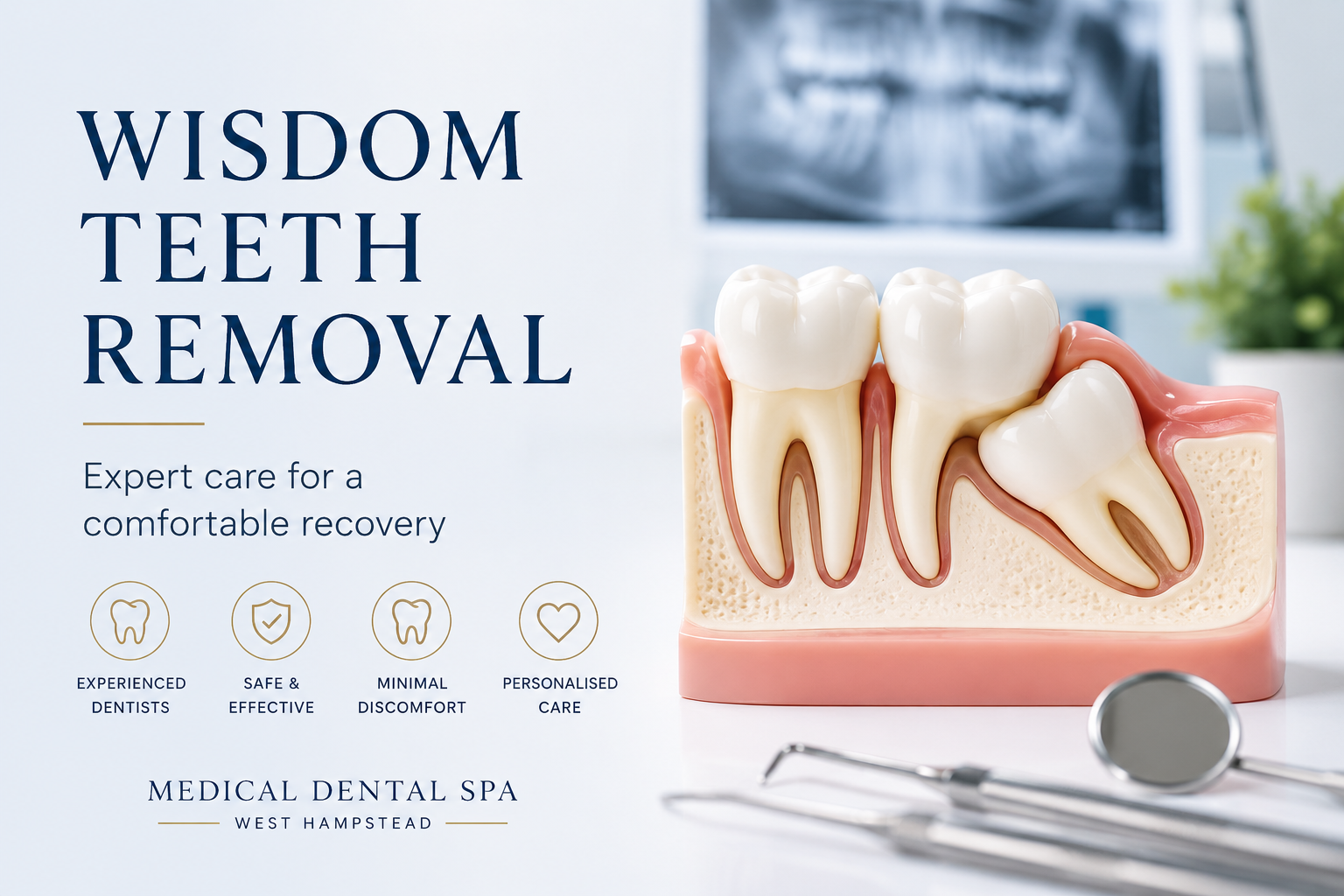
Wisdom teeth are the third molars located at the very back of the mouth. They are usually the last adult teeth to develop.
Some wisdom teeth emerge normally without causing problems. Others may:
The presence of a wisdom tooth does not automatically mean it needs removing.
Healthy wisdom teeth that are not causing problems may simply be monitored during routine dental examinations.

Wisdom tooth extraction may be considered when the tooth is causing dental problems or affecting nearby structures.
Common reasons include:
Your dentist will assess the tooth and explain whether removal is appropriate or whether another treatment may be suitable.
Wisdom tooth pain can develop for several reasons, including partial eruption, inflammation, decay or infection.
When a wisdom tooth is only partly visible, food debris and bacteria may accumulate around the surrounding gum.
Symptoms may include:
Pain does not always mean that extraction is required.
A dental examination can help identify the cause and determine whether monitoring, treatment or removal is appropriate.
Infection around a wisdom tooth can cause significant discomfort and should be professionally assessed.
Possible symptoms include:
Treatment depends on the cause and severity of the infection.
Some cases may require management of the immediate problem before a decision about extraction is made.
If you experience severe pain, significant swelling or rapidly worsening symptoms, contact the practice for urgent assessment.
An impacted wisdom tooth is one that has not erupted normally into the mouth.
This may happen because there is insufficient space or the tooth is positioned at an angle.
An impacted wisdom tooth may be:
Not every impacted wisdom tooth requires removal.
However, some may contribute to recurring inflammation, decay, infection or problems affecting nearby teeth.
Your dentist will assess the tooth's position and surrounding structures before recommending treatment.
Dental imaging may be required to understand the position of a wisdom tooth and its relationship to nearby structures.
Depending on your individual case, imaging may help assess:
An OPG panoramic X-ray may provide a broad overview of the teeth and jaws.
CBCT imaging may be considered in selected cases where additional three-dimensional information is clinically justified.
Not every wisdom tooth requires CBCT imaging.
Yes. A healthy wisdom tooth that is not causing dental problems may not require removal.
Your dentist may recommend monitoring when the tooth can be maintained without immediate treatment.
Regular examinations help identify changes such as:
If an immediate problem can be managed without extraction, suitable alternatives may also be discussed.
The decision to remove a wisdom tooth should be based on clinical findings rather than its presence alone.
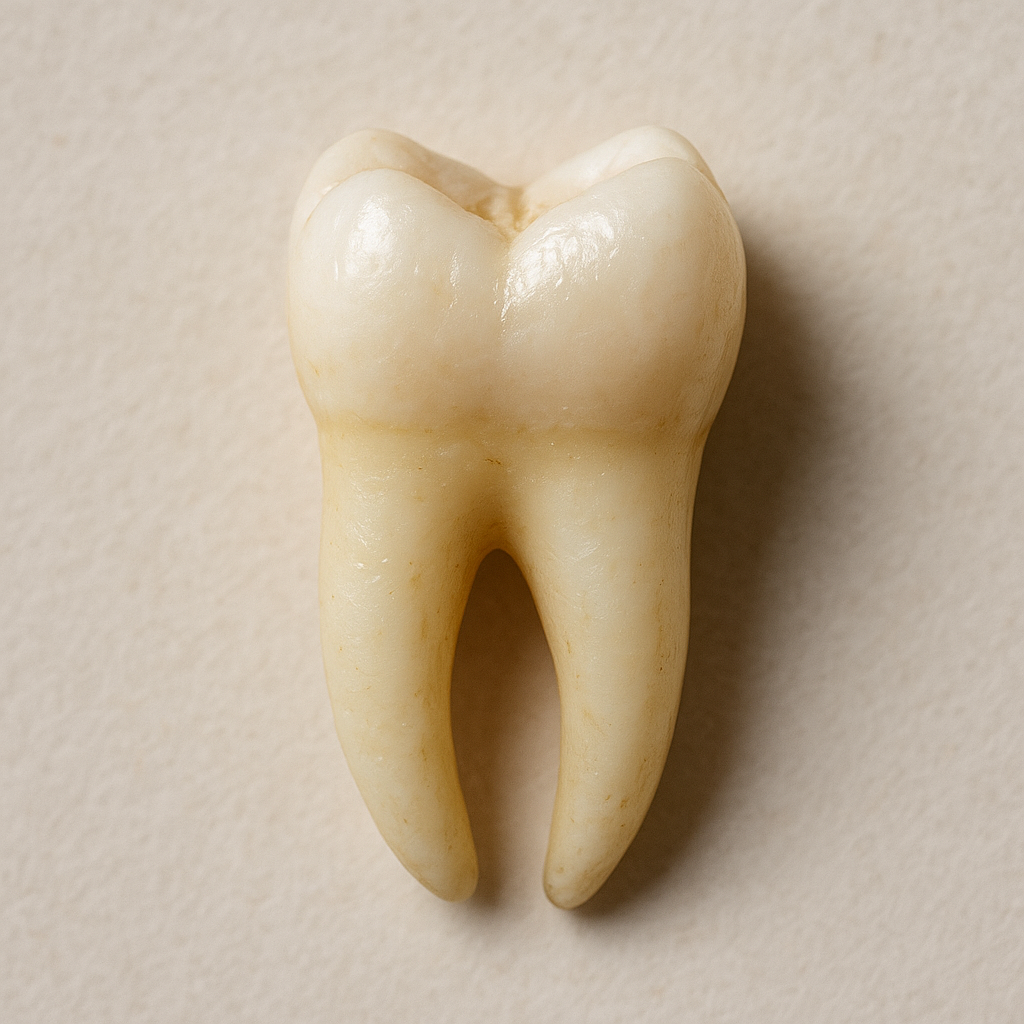
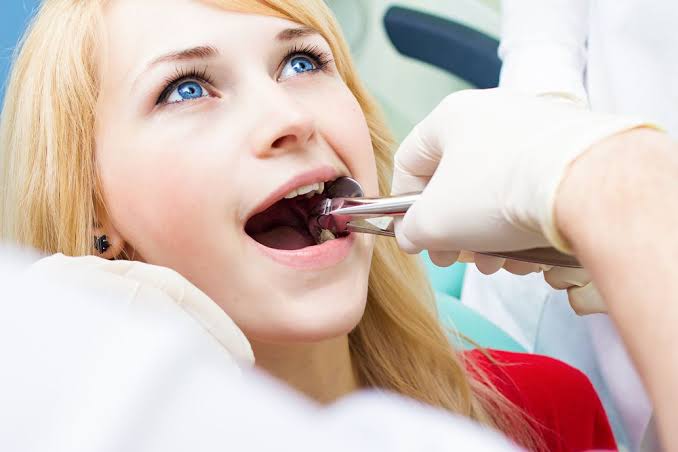
The procedure depends on the tooth's position, accessibility and complexity.
Some fully erupted wisdom teeth can be removed using a straightforward extraction technique.
Partially erupted or impacted teeth may require a surgical approach.
Depending on the case, treatment may involve:
Before treatment, your dentist will explain the procedure, relevant risks, expected recovery and applicable fees.
If the case requires more complex treatment, an appropriate referral may be recommended.
Wisdom tooth extractions are generally performed using local anaesthetic to numb the treatment area.
Your dentist will check that the area is adequately numb before proceeding.
You may feel pressure or movement during treatment, even when the area is numb.
If you feel nervous about wisdom tooth removal, tell the dental team before your appointment.
Your dentist can explain:
You do not need to decide on extraction before attending your initial assessment.

After extraction, the treatment area needs time to heal.
Your dental team will provide aftercare instructions based on the procedure performed.
General guidance may include:
Following your individual aftercare instructions helps support normal healing.
Contact the practice if you are unsure about any aspect of your recovery.
Wisdom tooth problems can sometimes develop suddenly or become more severe.
Contact West Hampstead Medical Dental Spa for urgent assessment if you experience:
Same-day emergency appointments may be available, subject to appointment capacity.
Seek immediate medical assistance if you develop serious symptoms such as difficulty breathing or swallowing, particularly with significant swelling.
Recovery varies depending on the type of extraction, tooth position, individual healing and general health.
Some temporary discomfort, swelling or jaw stiffness may occur after treatment.
Your dentist will explain what to expect from your specific procedure.
What Is Dry Socket?
After extraction, a blood clot normally forms inside the socket and helps protect the area during early healing.
A dry socket can develop when this clot does not form properly or becomes disrupted.
It may cause significant pain, particularly when discomfort begins increasing rather than gradually improving.
If you experience severe or worsening pain after extraction, contact the dental practice for assessment.
A wisdom tooth assessment helps determine the cause of your symptoms and whether extraction is necessary.
Discussing Your Symptoms
Your dentist will ask about pain, swelling, previous infections, difficulty chewing and recurring problems.
Clinical Examination
The tooth and surrounding area are examined for:
Dental Imaging
X-rays or further imaging may be recommended where clinically necessary.
Treatment Discussion
Your dentist will explain the findings and discuss suitable options, including monitoring, treatment, extraction or referral where appropriate.
West Hampstead Medical Dental Spa currently publishes tooth extraction from £180.
However, wisdom tooth removal costs depend on the position and complexity of the tooth.
Following your assessment, your dentist can explain:
The published £180 starting price for tooth extraction should not be assumed to be the price of every wisdom tooth removal.
You will have the opportunity to understand the proposed treatment and associated costs before proceeding.
No. Healthy wisdom teeth that are not causing problems may be monitored rather than removed.
Pain may result from partial eruption, gum inflammation, decay, infection or another dental problem. An examination helps identify the cause.
Possible symptoms include pain, swelling, gum tenderness, an unpleasant taste or feeling unwell. A dental examination is required to identify the cause.
An impacted wisdom tooth has not erupted normally, often because of its position or insufficient space.
Yes. Partially erupted teeth can be difficult to clean and may develop recurring inflammation, decay or infection.
No. Removal depends on symptoms, examination findings and whether the tooth is causing dental problems.
Imaging may be recommended to assess the tooth's position, roots and surrounding structures. Your dentist will determine what is necessary.
Local anaesthetic is generally used to numb the treatment area. Some pressure may be felt during treatment, and temporary discomfort can occur afterwards.
Not always. Some wisdom teeth are straightforward to remove, while impacted or difficult-to-access teeth may require a surgical approach.
Symptoms may sometimes settle, but this does not necessarily mean the underlying problem has resolved. Recurring pain should be assessed.
In some cases, their position may contribute to decay or other problems affecting adjacent teeth.
Recovery depends on the complexity of the extraction and individual healing. Your dentist will provide guidance specific to your procedure.
Dry socket is a painful complication that can occur when the blood clot within the extraction socket does not form properly or becomes disrupted.
Follow your dentist's aftercare instructions, protect the healing area and contact the practice if symptoms become concerning.
Medical Dental Spa publishes tooth extraction from £180. The actual wisdom tooth removal fee depends on the complexity of the procedure and will be explained following assessment.
Yes. Contact Medical Dental Spa if you have severe pain, swelling or another urgent dental concern. Same-day appointments may be available where possible.
Yes. New patients are welcome, even if they have not previously received a diagnosis or been advised that extraction is necessary.