Veneers cover the front surface of selected teeth, while composite bonding involves adding resin selectively.
The appropriate treatment depends on your teeth, bite, existing dental work and desired outcome.

Small changes to the shape or appearance of a tooth can sometimes make a noticeable difference to the overall balance of a smile.
At West Hampstead Medical Dental Spa, we provide Composite Bonding in West Hampstead for suitable patients who would like to improve concerns such as minor chips, uneven tooth edges or small gaps.
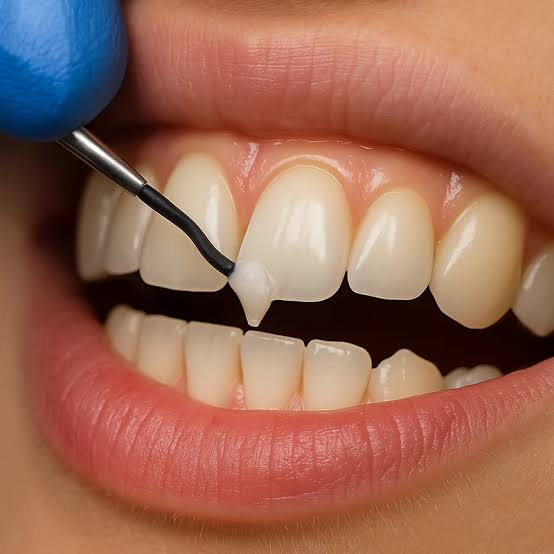
Composite bonding uses tooth-coloured resin that can be carefully added and shaped to selected areas of a tooth.
Before recommending treatment, your dentist will assess your teeth, gums, bite and smile goals to determine whether composite bonding is appropriate for you.
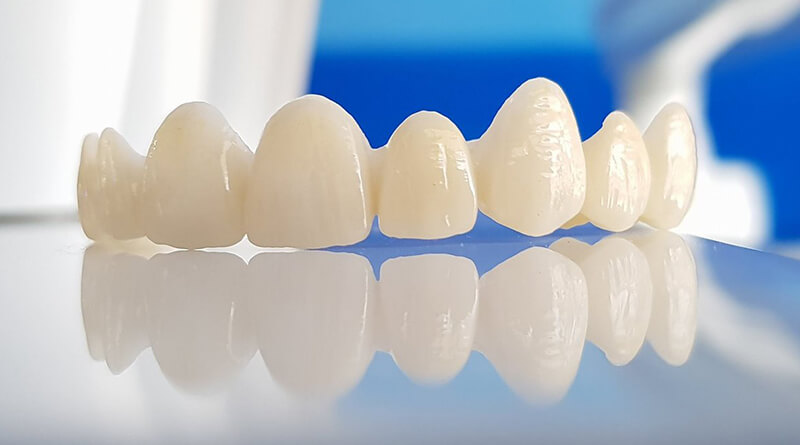
Composite bonding is a cosmetic dental treatment that uses tooth-coloured resin to alter selected areas of a tooth.
Rather than covering every tooth automatically, composite material can be added where appropriate to improve aspects of tooth shape, proportion or appearance.
Depending on your individual smile, composite bonding may be considered for concerns such as:
Every smile is different.
Your dentist will first assess the condition of the tooth and discuss what you would like to change before recommending treatment.
Composite bonding is not automatically the right treatment for every cosmetic concern.
Before treatment is recommended, your dentist will consider:
If decay, gum disease or another dental concern is present, this may need to be managed before cosmetic treatment begins.
The aim is to improve appearance without overlooking the health and function of your teeth.
One reason patients consider composite bonding is that it can be a relatively conservative way of making selected cosmetic changes.
The treatment involves adding composite resin to appropriate areas of the tooth rather than automatically covering the entire visible tooth surface.
However, minimally invasive does not mean that treatment should be undertaken without assessment.
The condition of the tooth, your bite and the type of cosmetic concern all influence whether bonding is appropriate.
Your dentist may recommend a different treatment if it provides a more suitable or predictable approach for your particular dental needs.
At West Hampstead Medical Dental Spa, cosmetic dentistry is planned around the individual rather than a standard smile template.
When considering composite bonding, treatment planning may take into account:
The aim is not simply to make teeth larger or dramatically different.
A considered approach should help the bonded teeth sit naturally within the rest of your smile.
Patients sometimes consider both teeth whitening and composite bonding as part of their cosmetic treatment.
It is important to plan these treatments in the correct sequence.
Whitening changes the colour of suitable natural teeth, while existing composite material does not respond to whitening in the same way.
If you are interested in both treatments, tell your dentist during your consultation.
Your dentist can assess your current tooth colour and discuss an appropriate treatment plan before bonding begins.
Composite bonding and dental veneers can both be used to alter aspects of a tooth's appearance, but they are different treatments.
Composite bonding involves adding tooth-coloured resin selectively to the tooth.
Dental veneers cover the visible front surface of selected teeth.
The appropriate option depends on factors such as:
One treatment is not automatically better than the other.
Your dentist can explain the advantages, limitations and suitability of each option after examining your teeth.
Some cosmetic concerns that appear to involve tooth shape may actually be related to tooth position or alignment.
For example, a small gap or uneven-looking smile may sometimes be improved through tooth movement rather than by adding restorative material.
For suitable patients, Clear Aligners may be considered when improving tooth position would better address the underlying concern.
In other cases, composite bonding may be appropriate after alignment to refine selected tooth shapes or edges.
These treatments should not automatically be combined.
Your dentist will assess your teeth, gums, bite and desired outcome before recommending a treatment sequence.
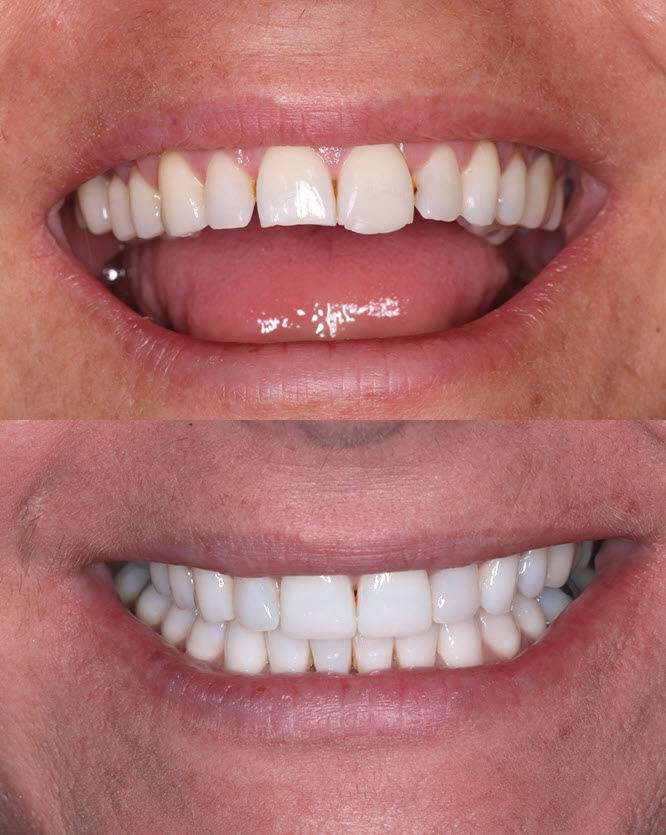
Composite bonding can be useful when relatively small changes to individual teeth may improve overall smile balance.
Chipped Teeth
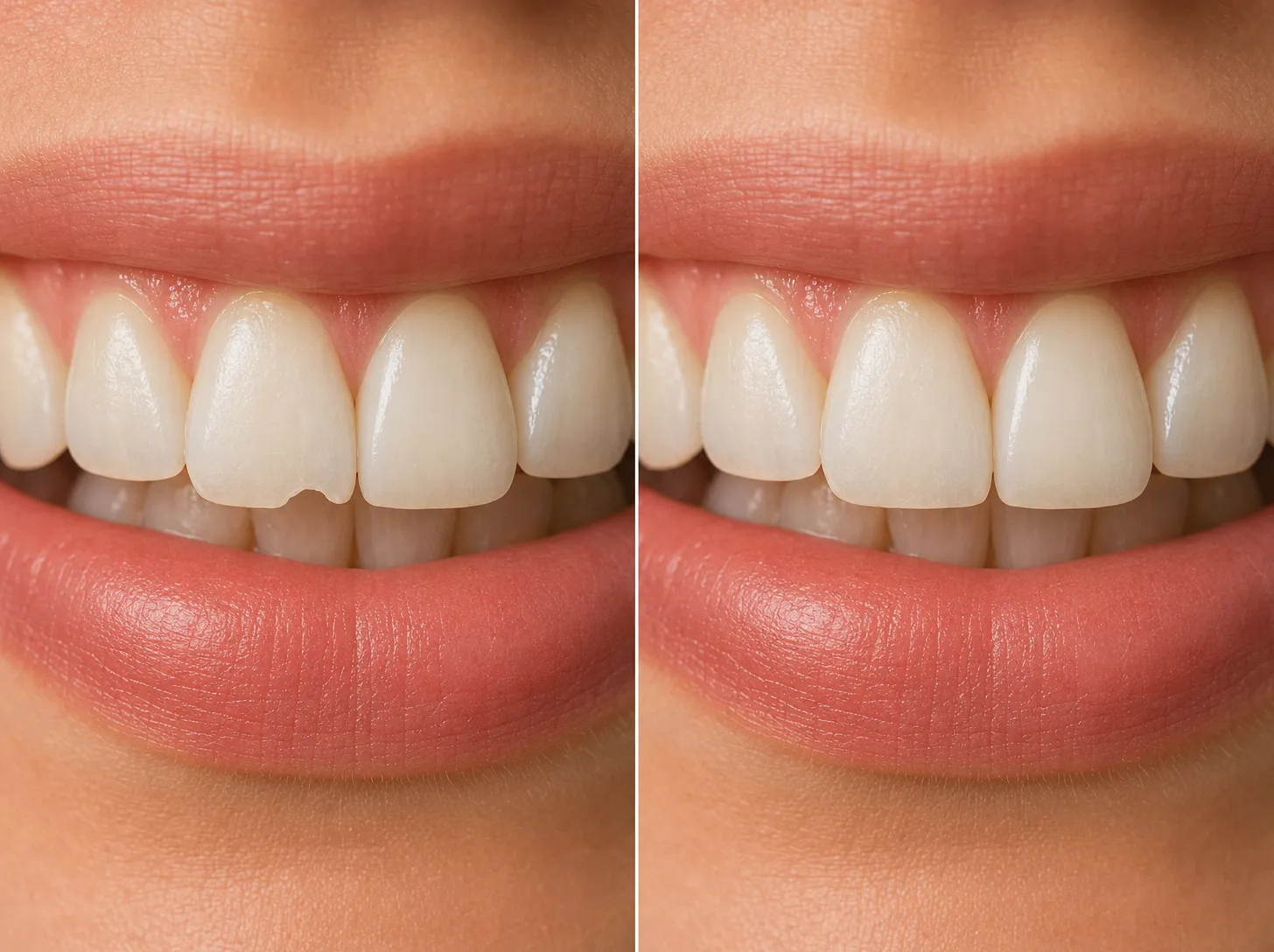
Small chips can affect the shape of a tooth and create an uneven edge.
For suitable teeth, composite material may be used to rebuild the affected area and improve its appearance.
The dentist will first check why the tooth has chipped and whether another treatment would be more appropriate.
Uneven Tooth Edges
Natural tooth shape, wear or previous damage can sometimes create uneven edges.
Composite bonding may allow selected areas to be reshaped to create a more balanced appearance.
Small Gaps Between Teeth
Some small spaces may be improved by carefully adding composite material to selected teeth.
However, bonding is not appropriate for every gap.
The size of the space, tooth position and bite should all be assessed before deciding whether bonding, Clear Aligners or another treatment would provide the more appropriate solution.
Tooth Shape and Proportion
Some patients are mainly concerned about the shape or proportion of one or more teeth.
Composite bonding can sometimes be used to alter selected contours without changing every tooth in the smile.
Treatment should be planned around your existing features rather than creating an identical appearance for every patient.
Your treatment begins with an individual dental assessment.
1. Consultation and Dental Assessment
Your dentist will examine your teeth and gums and ask what you would like to improve.
Your bite, tooth position and existing dental work may also be considered.
2. Smile and Treatment Planning
If composite bonding is suitable, your dentist will discuss which teeth may benefit from treatment and what changes may realistically be achieved.
The aim is to create a treatment plan suited to your own smile rather than applying a standard design.
3. Shade and Shape Planning
Composite resin is selected to work with the appearance of the surrounding teeth.
The material can then be carefully shaped according to the planned result.
4. Composite Placement
The tooth-coloured material is applied to the selected area and shaped by the dentist.
Treatment will depend on the condition of the tooth and the amount of correction required.
5. Finishing and Review
The bonded area is finished and polished.
Your dentist can also explain how to look after the restoration and when dental reviews are recommended.

Composite bonding requires ongoing care just like your natural teeth and other dental restorations.
Helpful habits include:
Bonded material can experience wear over time.
Regular dental reviews allow your dentist to monitor both the restoration and the surrounding tooth.

There is no single lifespan that applies to every composite bonding restoration.
How long bonding lasts can vary depending on several factors, including:
Regular dental reviews help your dentist monitor the condition of the restoration.
If wear, staining, chipping or another concern develops, your dentist can assess whether maintenance, repair or another treatment is appropriate.
Composite bonding is planned individually because the amount and complexity of treatment can vary considerably between patients.
West Hampstead Medical Dental Spa does not currently publish a standard Composite Bonding fee.
Following your assessment, your dentist will explain:
You will have the opportunity to understand your treatment plan and costs before deciding whether you would like to proceed.

Cosmetic treatment should begin with healthy foundations.
Before composite bonding is recommended, your dentist may assess:
A cosmetic concern may occasionally be associated with an underlying dental problem.
For example, repeatedly chipped teeth may require investigation rather than simply adding more composite material.
Addressing the cause helps your dentist plan treatment around both appearance and long-term dental health.
Composite bonding uses tooth-coloured resin that is added selectively to a tooth to alter aspects of its shape or appearance.
For suitable patients, bonding may help improve minor chips, uneven edges, selected small gaps and certain tooth-shape concerns.
A dental assessment is needed to determine whether bonding is appropriate.
Composite bonding can be a relatively conservative cosmetic option because material is added selectively to appropriate tooth surfaces.
However, every case is different, and your dentist should assess the tooth before recommending treatment.
There is no fixed lifespan.
Longevity varies according to factors including your bite, habits, maintenance and material wear. Regular dental reviews help monitor bonded restorations.
Bonding may improve some small spaces between teeth.
Larger gaps or spaces caused by tooth position may require a different approach, such as Clear Aligner treatment. Your dentist can advise after assessment.
Selected minor chips may be suitable for composite bonding.
Your dentist will first examine the tooth to determine the extent of the damage and whether bonding is an appropriate treatment.
Composite resin does not whiten in the same way as natural teeth.
If you are considering whitening and bonding, discuss both treatments with your dentist before treatment begins so the sequence and shade can be planned appropriately.
Veneers cover the front surface of selected teeth, while composite bonding involves adding resin selectively.
The appropriate treatment depends on your teeth, bite, existing dental work and desired outcome.
Some patients may consider bonding after their teeth have been aligned to refine selected shapes or edges.
It should not be added automatically. Your dentist will assess whether any additional cosmetic treatment is appropriate.
Medical Dental Spa currently assesses Composite Bonding individually rather than publishing a standard treatment price.
Your dentist will explain the relevant fee after assessing your teeth and proposed treatment.
Yes.
Your dentist should assess the condition of your teeth, gums, bite and existing restorations before deciding whether composite bonding is suitable.