How to Choose the Right Toothbrush: A Dentist’s Guide for Adults
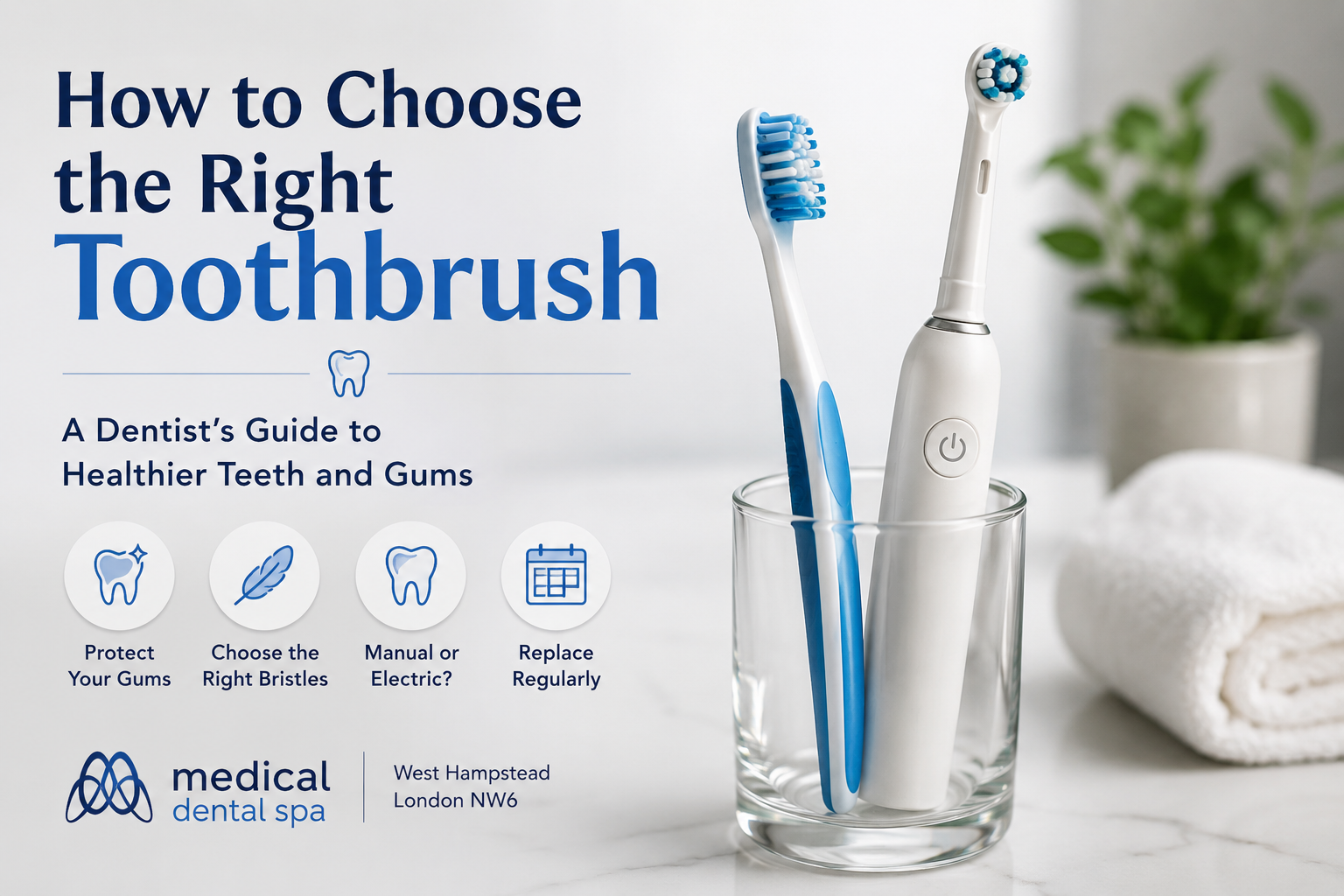
How to Choose the Right Toothbrush for Adults: A Dentist’s Guide to Healthier Teeth and Gums
By Dr Kamilla Kochanek and Dr Maciej Reska, Medical Dental Spa, West Hampstead, London NW6
Choosing the right toothbrush sounds simple, but many adults are not sure which one is best for their teeth and gums.
Choosing the right Should you use a manual or electric toothbrush? Are soft bristles really better? Do you need a pressure sensor? What if your gums bleed, your teeth are sensitive, or you wear aligners? Sounds simple, but many adults are not sure which one is best for their teeth and gums.
At Medical Dental Spa in West Hampstead, we are often asked:
“Which toothbrush should I actually buy?”
The answer is usually simpler than patients expect. For most adults, the best toothbrush is either a soft manual toothbrush or a good quality electric toothbrush with a timer and pressure sensor. The most important thing is not the price or the brand. It is whether the toothbrush helps you clean your teeth properly, gently and consistently every day.
Manual vs Electric Toothbrush
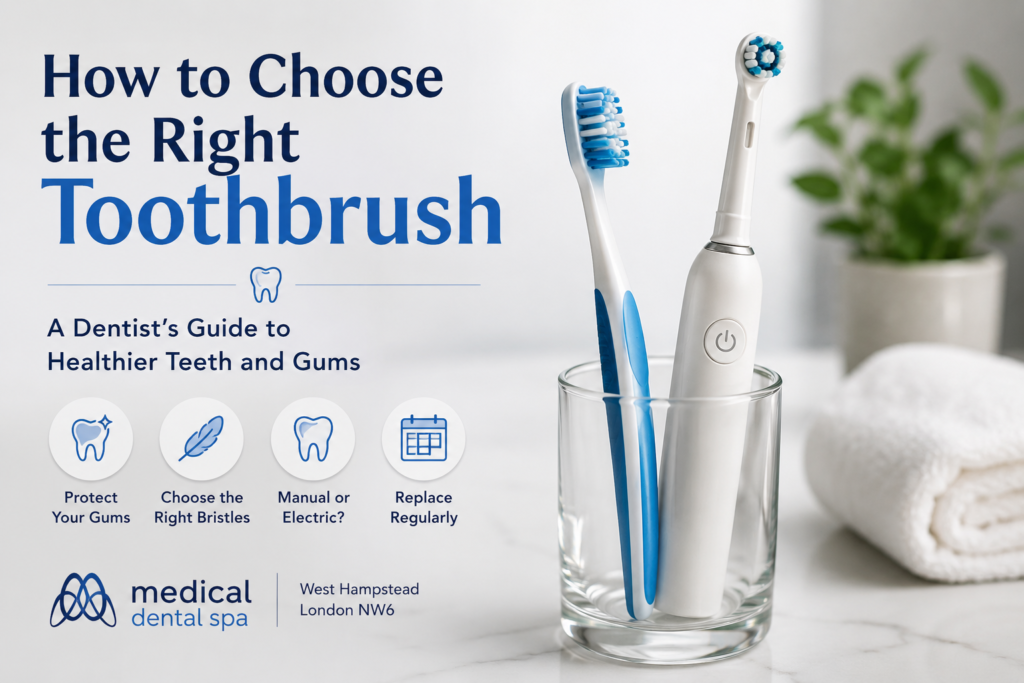
Choosing between a manual and an electric toothbrush is one of the most common questions we hear from patients. Both can clean your teeth effectively when used correctly, but they each have their own advantages.
| Feature | Manual Toothbrush | Electric Toothbrush |
|---|---|---|
| Cost | Lower | Higher |
| Easy to use | Good | Excellent |
| Pressure control | Depends on technique | Often includes pressure sensor |
| Timer | No | Usually included |
| Plaque removal | Very good | Excellent when used correctly |
| Recommended for gum disease | Good | Excellent |
| Recommended for implants | Good | Excellent |
Why Choosing the Right Toothbrush Matters
Your toothbrush removes plaque – the sticky layer of bacteria that builds up on your teeth and gums every day.
If plaque is not removed properly, it can lead to:
- Tooth decay
- Bleeding gums
- Gum disease
- Bad breath
- Tartar build-up
- Tooth sensitivity
- Gum recession
- Problems around crowns, bridges, veneers and implants
Many patients brush every day but still miss important areas, especially around the gumline and back teeth. Others brush too hard, thinking that more pressure means cleaner teeth. In reality, aggressive brushing can damage the gums and enamel over time. A good toothbrush should help you clean well without scrubbing or traumatising the gumline.
Manual or Electric Toothbrush: Which Is Better?
Both manual and electric toothbrushes can clean your teeth well if they are used correctly. However, for many adults, an electric toothbrush can make brushing easier and more consistent.
Manual toothbrushes
A manual toothbrush can be a very good choice if you use the correct technique.
It is:
- Affordable
- Easy to travel with
- Simple to replace
- Gentle when used properly
- Suitable for many adults
When choosing a manual toothbrush, look for:
- Soft or extra-soft bristles
- A small or medium-sized head
- Rounded bristle tips
- A comfortable handle
- Good access to the back teeth
Manual toothbrushes such as ultra-soft styles, including Curaprox-type brushes, are popular with many patients because they feel gentle on the gums while still helping to remove plaque effectively. They can be especially useful if you have sensitive teeth, gum recession or a tendency to brush too hard.
Electric toothbrushes
Electric toothbrushes are often recommended because they help patients brush more evenly and for long enough.
They are especially helpful if you:
- Brush too quickly
- Press too hard
- Have bleeding gums
- Have gum recession
- Have crowns, bridges, implants or veneers
- Wear aligners or retainers
- Find manual brushing difficult
- Want help brushing for the full two minutes
A good electric toothbrush should ideally have:
- A two-minute timer
- A pressure sensor
- A small brush head
- Have gum recession
- Replaceable heads
- A comfortable grip
The pressure sensor is particularly important. Many adults damage their gums not because they forget to brush, but because they brush too aggressively.
Dentist’s advice
The pressure sensor is particularly important. Many adults damage their gums not because they forget to brush, but because they brush too aggressively. If you are unsure, brush too hard, or want extra support, an electric toothbrush with a timer and pressure sensor is often a very good investment.
Why Most Dentists Recommend a Soft Toothbrush
For most adults, we recommend a soft or extra-soft toothbrush. Hard bristles are not better for cleaning. They may feel stronger, but they can irritate the gums and contribute to enamel wear, especially if you brush with too much pressure.
Soft bristles are usually better because they:
- Clean gently along the gumline
- Reduce the risk of gum irritation
- Help protect enamel
- Feel more comfortable on sensitive teeth
- Are safer around gum recession
- Clean effectively when used correctly
If your gums bleed when brushing, do not change to a harder toothbrush. Bleeding gums are often a sign of inflammation, plaque build-up or gum disease. A soft toothbrush, better technique and professional hygiene treatment are usually more helpful.
Soft, Medium or Hard Bristles?
Here is a simple guide:
| Toothbrush type | Best for | Dentist comment |
|---|---|---|
| Extra-soft | Sensitive teeth, gum recession, delicate gums | Very gentle and comfortable |
| Soft | Most adults | Usually the safest daily choice |
| Medium | Some adults with excellent technique | May be suitable, but pressure matters |
| Hard/firm | Rarely recommended | Can be too harsh for gums and enamel, If you are unsure, choose soft. |
What Size Toothbrush Head Is Best for Adults?
A smaller toothbrush head is often better than a large one. A large head may look like it cleans more at once, but it can be difficult to move around the mouth. A small or medium-sized head gives better control and helps you reach difficult areas.
A compact head is useful for cleaning:
- Back molars
- Wisdom tooth areas
- The gumline
- Behind the lower front teeth
- Around crowns and bridges
- Around implants
- Behind the last teeth
If the toothbrush feels too big to reach the back teeth comfortably, it is probably not the best brush for you.
Best Toothbrush for Sensitive Teeth
If you have sensitive teeth, choose a soft or extra-soft toothbrush with a small head. Sensitivity can become worse if you brush too hard or use a firm toothbrush. Gentle brushing is very important.
Patients with sensitive teeth often benefit from:
- Soft bristles
- Gentle brushing pressure
- A small toothbrush head
- Fluoride toothpaste for sensitivity
- Avoiding aggressive scrubbing
- Regular dental checks
If your sensitivity is new, severe or only affects one tooth, book a dental examination. Sensitivity can sometimes be caused by decay, cracks, gum recession or worn enamel.
Best Toothbrush for Bleeding Gums
If your gums bleed when brushing, choose a soft toothbrush and clean gently along the gumline. Bleeding gums are common, but they are not normal. They are often caused by plaque and inflammation.
Do not stop brushing because your gums bleed. Instead:
- Use a soft toothbrush
- Brush gently but thoroughly
- Clean between the teeth daily
- Book a hygiene appointment
- Ask your dentist or hygienist to check your gum health
A professional hygiene treatment can remove plaque and tartar that your toothbrush cannot remove at home.
Best Toothbrush for Gum Recession
If you have gum recession, soft or extra-soft bristles are usually best. Gum recession can be made worse by aggressive brushing, especially with a hard toothbrush. If you use an electric toothbrush, choose one with a pressure sensor. This can help protect your gums by warning you when you press too hard.
Patients with gum recession should avoid:
- Hard toothbrushes
- Scrubbing side to side
- Whitening toothpastes that feel abrasive
- Brushing immediately after acidic foods or drinks
- Applying too much pressure
Gentle technique is essential.
Best Toothbrush for Aligners and Retainers
If you wear clear aligners or retainers, oral hygiene becomes even more important.
Plaque trapped under aligners can increase the risk of:
- White spots
- Tooth decay
- Bad breath
- Gum inflammation
- Staining
- Tartar build-up
For your teeth, use a soft manual toothbrush or an electric toothbrush with a timer and pressure sensor. For your aligners or retainers, use a separate cleaning brush.
Do not use the same brush for your teeth and aligners if it becomes contaminated with toothpaste residue. Also avoid cleaning aligners with abrasive toothpaste, as this can scratch the plastic and make them look cloudy.
A good aligner care routine includes:
- Brushing your teeth before reinserting aligners
- Cleaning aligners daily
- Using a separate aligner brush
- Avoiding hot water
- Storing aligners in a proper case
- Using cleaning tablets if recommended
A travel toothbrush kit can be very useful if you wear aligners at work, school or while travelling.
Best Toothbrush for Crowns, Bridges, Veneers and Implants
If you have crowns, bridges, veneers or implants, your toothbrush should be gentle but effective. A soft toothbrush helps clean around the gumline without damaging the surrounding tissues.
However, a toothbrush alone is not enough. You may also need:
- Interdental brushes
- Floss
- Superfloss
- A water flosser
- Implant-specific cleaning aids
Plaque around crowns, bridges and implants can lead to gum inflammation and long-term problems. Your dentist or hygienist can show you exactly which tools are best for your mouth.
How Often Should Adults Replace a Toothbrush?
Replace your manual toothbrush or electric toothbrush head every three months.
Replace it sooner if:
- The bristles look worn
- The bristles are splayed
- The toothbrush no longer feels effective
- You have been unwell
- The brush has been stored unhygienically
- It has been dropped somewhere unclean
Worn bristles do not clean properly. They can also encourage you to brush harder, which may irritate your gums. A simple habit is to change your toothbrush or brush head at the start of every new season.
How to Brush Properly
The toothbrush matters, but technique matters just as much. Brush twice a day for two minutes using fluoride toothpaste. At night, brushing should be the last thing you do before sleeping. After brushing, spit out the toothpaste, but do not rinse with water. This helps fluoride stay on the teeth for longer.
Dentist-approved brushing technique
Place the toothbrush at a slight angle towards the gumline. Use gentle circular movements or small controlled movements. Do not scrub aggressively from side to side.
Make sure you clean:
- Outside surfaces
- Inside surfaces
- Biting surfaces
- The gumline
- Behind the back teeth
- Behind the lower front teeth
The lower front teeth often collect tartar quickly, so spend enough time there.
Common Brushing Mistakes Adults Make
Many adults brush every day but still make small mistakes that affect their oral health.
Common mistakes include:
- Brushing too hard
- Using a too hard toothbrush
- Brushing for less than two minutes
- Missing the gumline
- Forgetting the back teeth
- Rinsing immediately after brushing
- Keeping the same toothbrush for too long
- Not cleaning between the teeth
- Using toothpaste to clean aligners or retainers
Good brushing should feel gentle and controlled, not aggressive.
Do You Still Need Floss or Interdental Brushes?
Yes. A toothbrush cleans the visible surfaces of the teeth, but it cannot fully clean between them.
Depending on your mouth, your dentist or hygienist may recommend:
- Interdental brushes
- Floss
- Dental tape
- Superfloss
- Water flosser
For many adults, interdental brushes are easier and more effective than traditional floss, but the correct size matters. At Medical Dental Spa, our hygiene appointments include personalised home care advice, so you know exactly what to use and how to use it.
Quick Toothbrush Buying Checklist for Adults
Before buying your next toothbrush, look for:
- Soft or extra-soft bristles
- Small or medium-sized head
- Comfortable handle
- Gentle feel on the gums
- Easy access to the back teeth
- Recognised dental accreditation if available
- Timer if electric
- Pressure sensor if electric
- Separate brush for aligners or retainers
- Travel case if needed
If you are unsure, choose soft bristles and a smaller head.
Frequently Asked Questions
What toothbrush do dentists recommend for adults?
Most dentists recommend a soft manual toothbrush or a good quality electric toothbrush with a timer and pressure sensor.
Is an electric toothbrush better than a manual toothbrush?
An electric toothbrush can make brushing easier and more consistent, but a manual toothbrush can also work well if used correctly.
Should adults use soft or medium bristles?
Soft bristles are usually the safest choice for most adults. Medium bristles may be suitable for some patients, but technique and pressure are important.
Are hard toothbrushes bad for teeth?
Hard toothbrushes can be too harsh and may contribute to gum irritation, gum recession and enamel wear.
What is the best toothbrush for bleeding gums?
A soft toothbrush is usually best. Bleeding gums may be a sign of gum inflammation, so book a dental or hygiene appointment if bleeding continues.
What is the best toothbrush for sensitive teeth?
A soft or extra-soft toothbrush with a small head is usually best for sensitive teeth.
How often should I replace my toothbrush?
Every three months, or sooner if the bristles are worn or after illness.
Do I still need interdental brushes if I use an electric toothbrush?
Yes. Toothbrushes do not fully clean between the teeth, so interdental cleaning is still important.
When to Ask Your Dentist for Advice
Ask your dentist or hygienist for toothbrush advice if you have:
- Bleeding gums
- Sensitive teeth
- Gum recession
- Bad breath
- Aligners or retainers
- Crowns, bridges or implants
- Difficulty brushing properly
- Tartar build-up
- Pain when brushing
There is no single toothbrush that is perfect for everyone. Your toothbrush should match your mouth, your gums and your daily routine. At Medical Dental Spa in West Hampstead, we can help you choose the right toothbrush, interdental brushes and home care routine for your smile.
Final Thoughts from Our Dentists
For most adults, the safest choice is a soft toothbrush with a small head, or a good electric toothbrush with a timer and pressure sensor. But the most important thing is how you use it. Brush gently. Brush for two minutes. Clean between your teeth. Replace your toothbrush regularly. And if your gums bleed or your teeth feel sensitive, ask your dentist for advice.
A healthier smile often starts with small daily habits – and the right toothbrush is one of the simplest places to begin.
Need personalised toothbrush advice?
Book a dental examination or hygiene appointment at Medical Dental Spa in West Hampstead, London NW6. Our dentists and hygienists will help you choose the right toothbrush and daily oral hygiene routine.
Medical Dental Spa
Unit 5, Hampstead West, 224 Iverson Road, West Hampstead, London NW6 2HL
Open 7 days a week
Dental examinations, hygiene treatment, emergency dentistry, whitening, aligners and family dental care.