Dental Crown vs Filling – Which Treatment Is Right for Your Tooth?
If you’ve been told that you need either a filling or a dental crown, it’s natural to wonder what the difference is. Although both treatments are designed to repair damaged teeth, they are used in very different situations. Choosing the right option depends on how much of the tooth remains healthy, where the damage is located and how much strength the tooth needs to withstand everyday chewing.
Many patients assume that a crown is simply a larger filling, but this isn’t the case. A filling repairs a specific area of decay or damage, while a crown completely covers the visible part of the tooth, providing additional strength and protection. Your dentist will recommend the most suitable treatment after carefully examining your tooth and discussing the long-term outlook with you.
At Medical Dental Spa West Hampstead, we believe in preserving as much of your natural tooth as possible. Whenever a tooth can be successfully restored with a filling, we will recommend that approach. However, when a tooth has become weakened through extensive decay, fractures or previous large fillings, a dental crown may offer a more predictable and durable solution.
Understanding why one treatment is recommended over another can help you make an informed decision about your dental care. In this guide, we’ll explain how fillings and crowns differ, when each treatment is appropriate, and how they help restore both the appearance and function of your smile.
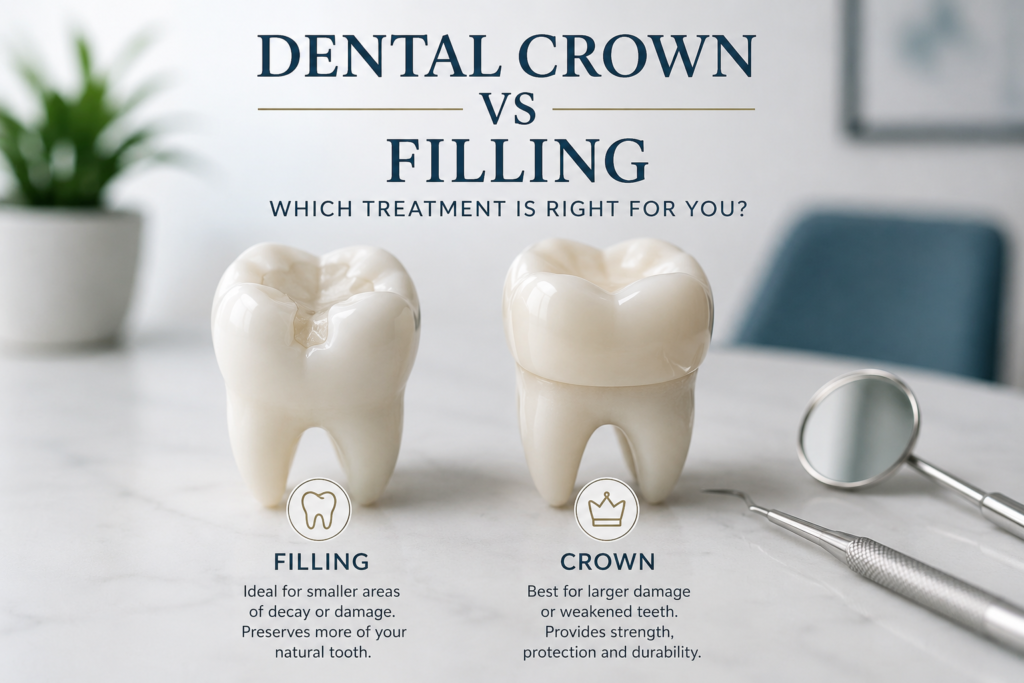
What’s the Difference Between a Dental Crown and a Filling?
Although fillings and crowns both repair damaged teeth, they restore them in different ways.
A dental filling is used when only a small or moderate part of the tooth has been damaged by decay, wear or a minor fracture. The damaged tissue is carefully removed before the cavity is cleaned and restored using a durable filling material. Modern tooth-coloured composite fillings blend naturally with your surrounding teeth, making them an excellent choice for restoring both function and appearance.
A dental crown, sometimes referred to as a cap, is recommended when much more of the tooth has been lost or weakened. Instead of repairing one section, the crown completely covers the visible part of the tooth above the gum line. This protects the remaining natural tooth while restoring its strength, shape and appearance.
When is a dental filling usually recommended?
A filling is often the best option if:
- Tooth decay is relatively small.
- An old filling needs replacing.
- A tooth has a small chip or minor fracture.
- Most of the natural tooth remains healthy.
- The tooth can still comfortably withstand normal biting forces.
Because only a small amount of tooth structure is removed, fillings are considered one of the most conservative forms of dental treatment.
When is a dental crown usually recommended?
A dental crown may be advised when:
- A large portion of the tooth has been damaged.
- The tooth has a large existing filling that is beginning to fail.
- A crack has weakened the tooth.
- Root canal treatment has left the tooth more fragile.
- The tooth has become worn down over many years.
- Additional strength is needed to prevent future fractures.
Crowns distribute biting forces more evenly across the tooth, helping to reduce the risk of further damage.
Which dental treatment lasts longer?
Both fillings and crowns can provide many years of reliable service when looked after properly.
The lifespan depends on several factors, including:
- Daily oral hygiene.
- Regular dental examinations.
- Professional hygiene appointments.
- Diet.
- Teeth grinding or clenching.
- The size and position of the restoration.
Neither treatment lasts forever, but regular maintenance can significantly extend their lifespan.
Which option is better?
There isn’t a universal answer.
A filling is often the preferred choice because it preserves more natural tooth structure. However, placing a filling into a tooth that has already lost significant strength may increase the risk of the tooth cracking later. Likewise, placing a crown too early may remove more healthy tooth than necessary. The best treatment is always the one that provides the greatest long-term success for your individual tooth.
At Medical Dental Spa, every treatment recommendation is based on careful clinical examination, digital imaging where appropriate, and a personalised discussion with you about the available options.

What’s the Difference Between a Dental Crown and a Filling? – Frequently Asked Questions
Is a crown stronger than a filling?
Generally, yes. A crown surrounds the entire visible part of the tooth, providing greater support for heavily restored or weakened teeth. Fillings are designed to repair smaller areas of damage while preserving as much natural tooth as possible.
Does having a crown hurt?
Dental crowns are placed using local anaesthetic to keep you comfortable throughout the procedure. Most patients experience little more than mild sensitivity for a short period afterwards.
Can a filling be replaced with a crown later?
Yes. If a tooth becomes weaker over time or an existing filling becomes too large to provide adequate support, a crown may be recommended as the next stage of treatment.
Can a crown stop a cracked tooth from getting worse?
In many cases, yes. A crown can help hold a weakened tooth together and reduce the risk of the crack spreading further. However, every crack is different, so an examination is essential.
How do I know if my old filling needs replacing?
Signs may include sensitivity, pain when biting, visible cracks, rough edges or food repeatedly becoming trapped around the filling. Regular dental check-ups help identify failing fillings before they cause more serious problems.
Can crowns and fillings look natural?
Yes. Modern tooth-coloured fillings and ceramic crowns are carefully matched to the shade of your surrounding teeth, providing a natural-looking result.
Are crowns only used after root canal treatment?
No. Although crowns are commonly placed after root canal treatment to strengthen the tooth, they are also used for large fractures, worn teeth and extensive decay.
How long does treatment take?
Most fillings can be completed in a single appointment. Crowns usually require at least two visits unless same-day digital crown technology is available.
Restore Your Smile with the Right Dental Treatment
Whether you need a small filling or a full dental crown, the goal is always the same: to protect your natural tooth and restore your smile with a long-lasting, comfortable result.
At Medical Dental Spa, we take time to explain every treatment option, answer your questions and recommend the solution that best suits your oral health and long-term needs. If you’re experiencing tooth pain, have a damaged filling, or have been told you may need a crown, our experienced team is here to help.
Book an appointment today and let us assess your tooth, discuss your options and help you keep your smile healthy for years to come.