
Your Child’s First Dental Visit – A Parent’s Complete Guide
Your Child’s First Dental Visit: Everything Parents Need to Know
A child’s first visit to the dentist is an important milestone and can help lay the foundation for a lifetime of healthy smiles. While many parents feel uncertain about when to arrange the first appointment or what to expect, early dental visits are designed to be positive, relaxed and educational rather than intimidating. Introducing your child to the dental environment at an early age allows them to become familiar with the sights, sounds and friendly faces, helping to build confidence and reduce anxiety in future.
Many dental problems can begin long before a child complains of dental pain. Regular dental examinations allow your dentist to monitor how the teeth and jaws are developing, identify any early signs of tooth decay and provide practical advice tailored to your child’s age. Preventive care is always preferable to treating problems once they have developed, making early appointments an important investment in your child’s long-term oral health.
At Medical Dental Spa West Hampstead, we believe that every child deserves a calm, gentle and positive introduction to dentistry. Our experienced team takes the time to explain each step in a reassuring way, ensuring both children and parents feel comfortable throughout the visit. Whether it is your baby’s first tooth or your child is preparing to start school, we are here to help make every appointment as enjoyable and stress-free as possible.
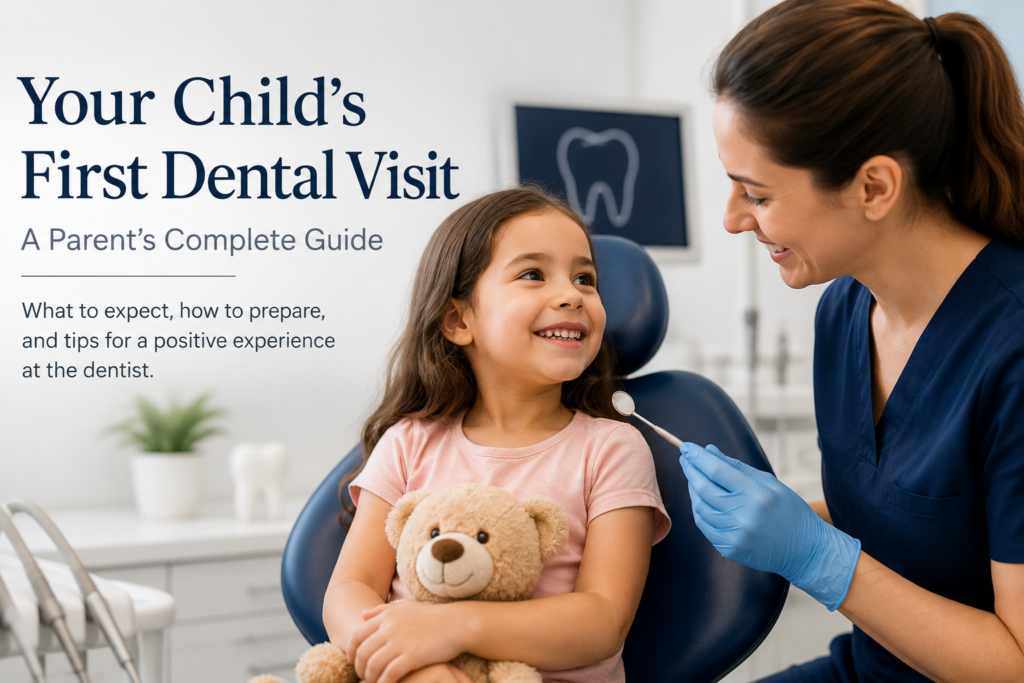
What Happens During Your Child’s First Dental Visit?
A first dental appointment is usually much simpler than many parents expect. Rather than carrying out extensive treatment, the main aim is to help your child feel comfortable while checking that their teeth, gums and mouth are developing as expected.
During the appointment, your dentist may:
Welcome your child in a relaxed environment
The first few minutes are often spent allowing your child to become familiar with the dental chair and equipment. Younger children may prefer to sit on a parent’s lap while meeting the dentist.
Examine your child’s teeth and gums
A gentle examination checks for healthy tooth development, early signs of tooth decay, gum health and any concerns affecting the mouth, tongue or soft tissues.
Monitor jaw and bite development
As children grow, the dentist can identify changes in the way the teeth are erupting and how the upper and lower jaws are developing. Detecting concerns early may reduce the need for more complex treatment later.
Discuss brushing and oral hygiene
Parents receive personalised advice on:
- Brushing techniques
- Choosing an age-appropriate toothbrush
- Fluoride toothpaste recommendations
- Cleaning between teeth when appropriate
Offer dietary guidance
Many cases of childhood tooth decay are linked to frequent sugary snacks and drinks rather than the amount of sugar consumed at one time. Your dentist can provide practical advice on protecting young teeth while maintaining a balanced diet.
Answer your questions
Every child is different. Your appointment is an opportunity to discuss topics such as:
- Thumb sucking
- Dummy use
- Teething
- Tooth grinding
- Orthodontic concerns
- Sports mouthguards
- Preventing cavities
Build confidence
Perhaps the most important goal is ensuring your child leaves with a positive impression of visiting the dentist. Pleasant early experiences often lead to greater confidence and better attendance throughout adulthood.
Preparing Your Child Before the Appointment
Parents can make a significant difference to their child’s experience by speaking positively about visiting the dentist.
Helpful tips include:
- Describe the dentist as someone who helps keep teeth healthy.
- Avoid using words such as “pain”, “needle” or “hurt”.
- Read children’s books about visiting the dentist beforehand.
- Let your child bring a favourite toy for reassurance.
- Schedule appointments when your child is usually well rested.
Remaining calm yourself also helps children feel relaxed, as they often pick up on their parent’s emotions.
Why Early Dental Visits Matter
Children who attend regular dental examinations from an early age are more likely to develop positive oral hygiene habits and maintain healthier teeth as they grow.
Routine dental visits can help:
- Prevent tooth decay.
- Detect problems before they become painful.
- Monitor tooth and jaw development.
- Reduce dental anxiety.
- Encourage good brushing habits.
- Build confidence in visiting the dentist.
- Support healthy adult teeth as they develop.
Good oral health begins long before the adult teeth appear, making preventive care one of the best gifts parents can give their children.
Child’s First Dental Visit: FAQs
At what age should my child first visit the dentist?
Current guidance recommends arranging your child’s first dental visit when their first tooth appears or before their first birthday. Early visits allow the dentist to monitor development and provide preventive advice.
How long does the first appointment usually take?
Most first appointments are relatively short, typically lasting between 20 and 30 minutes depending on your child’s age and how comfortable they feel.
Will my child need any treatment?
In most cases, the first visit is simply an examination and an opportunity to become familiar with the dental practice. Treatment is only recommended if necessary.
What if my child is frightened?
This is completely normal. Our team uses a calm and gentle approach, allowing children to become comfortable at their own pace without rushing the appointment.
Should I stay with my child during the dental examination?
Yes. Younger children often feel more secure with a parent present, and we encourage parents to remain with them throughout the appointment whenever appropriate.
How often should children have dental check-ups?
Most children benefit from regular examinations every six months, although your dentist may recommend a different interval depending on your child’s individual needs.
Can baby teeth really get cavities?
Yes. Although baby teeth eventually fall out, they can still develop tooth decay. Healthy baby teeth are important for eating, speaking and guiding adult teeth into the correct position.
Should children use fluoride toothpaste?
Yes. Fluoride helps strengthen tooth enamel and reduce the risk of cavities. Your dentist can recommend the appropriate toothpaste and amount based on your child’s age.
Give Your Child the Best Start to Lifelong Oral Health
Positive dental experiences during childhood often shape how people feel about visiting the dentist for the rest of their lives. Starting early allows children to become familiar with routine dental care, develop healthy habits and build confidence in looking after their smile.
At Medical Dental Spa, we are committed to providing gentle, patient-centred dental care for the whole family. Whether you are arranging your child’s very first appointment or simply have questions about their oral health, our friendly team is always happy to help.
We welcome families from West Hampstead, Kilburn, Cricklewood, Edgeware, Swiss Cottage, St John’s Wood and the surrounding areas, offering convenient appointments seven days a week. If you’re ready to give your child a positive introduction to dental care, we’d be delighted to welcome you to our practice.
Related Dental Services
Every child deserves the best possible start to lifelong oral health. Explore our related dental services to learn more about preventive care, routine check-ups and how our experienced team can help keep your family’s smiles healthy at every stage of life. Whether you’re booking your child’s first appointment or looking after your own dental health, we’re here to support you seven days a week.