Holiday Dental Guide
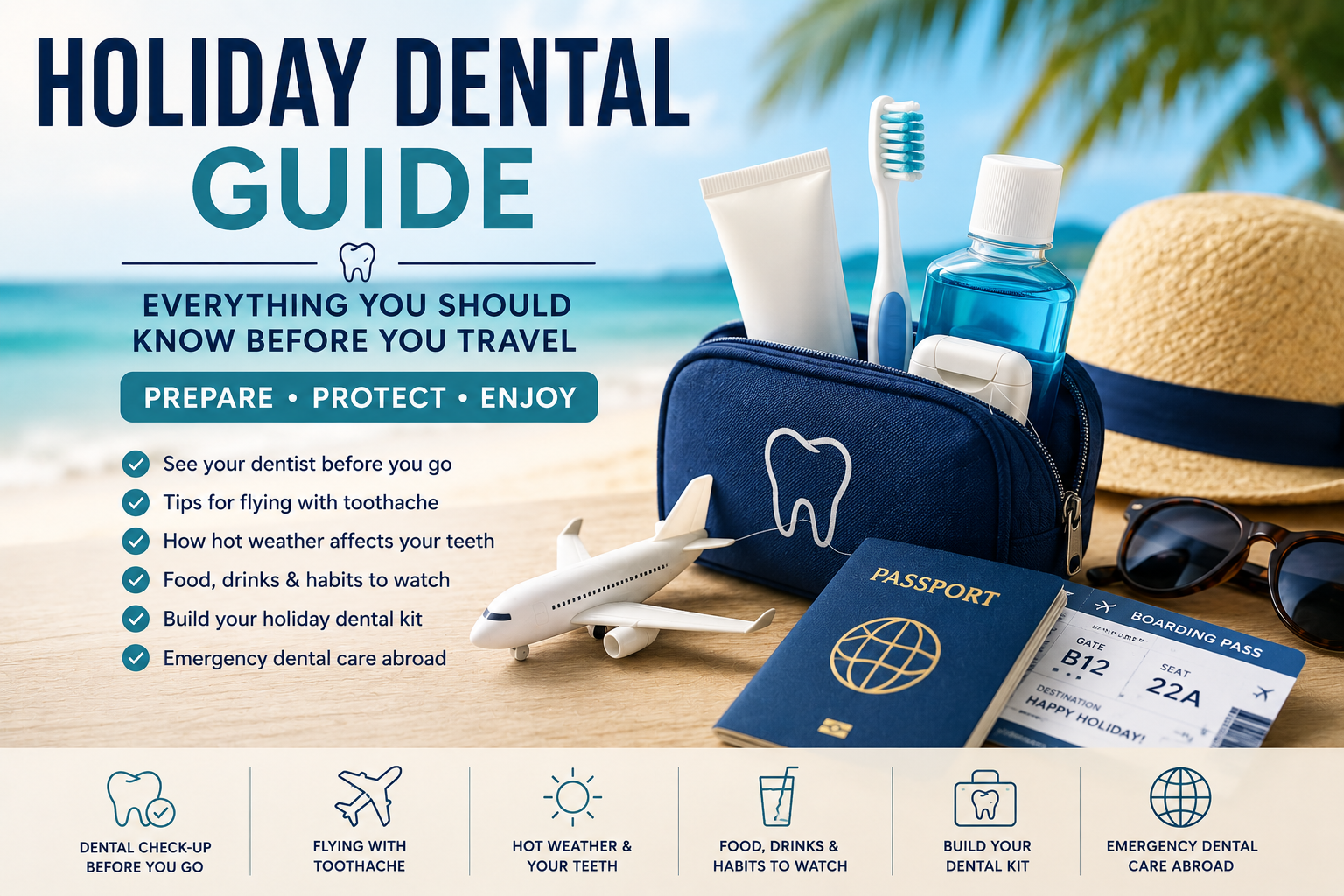
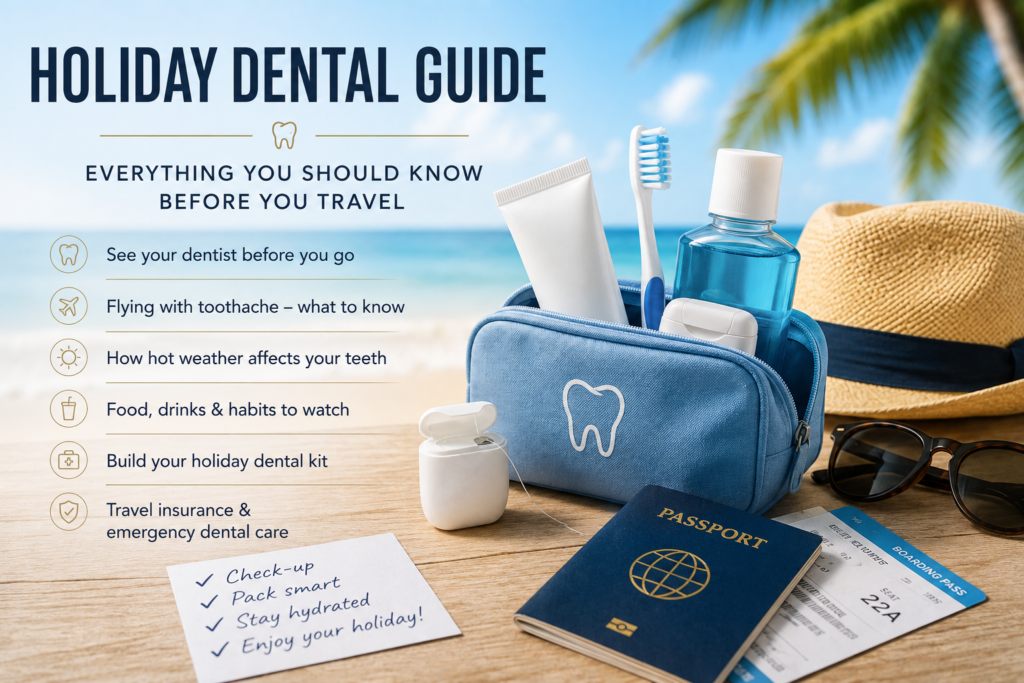
Holiday Dental Guide: Everything You Should Know Before You Travel
Enjoy Your Holiday with Confidence – Start by Looking After Your Smile
Planning a holiday is exciting. Whether you’re heading for a relaxing beach break, a city escape or an adventure overseas, you’ll probably spend weeks organising flights, accommodation, travel insurance and packing. However, one thing that is often overlooked is your dental health.
Dental problems rarely arrive at a convenient time. A minor toothache can quickly become severe, a loose filling may fall out while enjoying a meal, or a cracked tooth can turn into a painful emergency when dental care is difficult to access. Even something as simple as increased sugar consumption or dehydration during hot weather can affect your oral health.
Fortunately, many holiday-related dental problems can be prevented with a little preparation before you leave home.
This guide explains why booking a dental check-up before travelling is a sensible idea, how flying may affect an existing tooth problem, what to pack in your travel dental kit and how to keep your teeth healthy while enjoying your holiday. By following a few simple steps, you can focus on making memories instead of searching for an emergency dentist abroad.
Why You Should Visit Your Dentist Before Going on Holiday
One of the best ways to avoid a dental emergency abroad is to arrange a routine dental examination before you travel, particularly if it has been several months since your last check-up.
Many dental problems develop gradually and may not cause noticeable symptoms until they become more serious. Small cavities, worn fillings or early gum disease can often be identified during a routine examination before they lead to pain or infection.
A pre-holiday dental check-up allows your dentist to:
- Detect early signs of tooth decay.
- Check existing fillings and crowns.
- Assess your gums for signs of gum disease.
- Identify cracked or weakened teeth.
- Provide advice if you have sensitive teeth.
- Recommend treatment before your holiday if necessary.
It also provides peace of mind, allowing you to travel knowing your oral health has been professionally assessed.
Can Flying Make Toothache Worse?
Many people are surprised to learn that flying can sometimes make an existing dental problem feel more uncomfortable.
As an aircraft climbs and descends, changes in cabin pressure can affect tiny pockets of air trapped inside a damaged tooth, beneath a leaking filling or around untreated decay. This may cause discomfort or even sudden sharp pain in some individuals.
Although this doesn’t happen to everyone, it is more likely if you already have:
- Untreated tooth decay.
- A cracked tooth.
- A loose or leaking filling.
- An untreated dental infection.
- An inflamed tooth nerve.
If you’ve recently started experiencing toothache before travelling, it’s always advisable to have it assessed rather than hoping it will settle during your holiday.
Is It Safe to Fly After Dental Treatment?
In most cases, yes.
Routine dental treatments such as examinations, hygiene appointments, fillings and crowns usually do not prevent you from flying. However, if you’ve recently had more complex treatment, your dentist may advise waiting for a short period before travelling, depending on your individual circumstances.
Examples include:
Tooth extraction
Following an extraction, a blood clot forms to help the socket heal. Your dentist may advise avoiding unnecessary travel immediately afterwards, particularly if you experience complications or require additional treatment.
Dental implants
Most patients can travel after implant placement, although your dentist may wish to review healing before you leave if the procedure was recent.
Root canal treatment
Many patients travel safely after root canal treatment, but if the tooth is still being monitored or requires further appointments, it may be sensible to complete treatment before your holiday.
If you’re unsure, always ask your dentist for personalised advice before booking your trip.
Hot Weather, Heatwaves and Your Oral Health
Warm weather often changes our daily habits, and some of these changes can affect our teeth and gums.
Dehydration
Hot weather increases fluid loss through sweating. If you become dehydrated, your mouth may produce less saliva.
Saliva plays an important role by:
- Neutralising acids.
- Washing away food particles.
- Protecting tooth enamel.
- Helping control harmful bacteria.
A dry mouth can increase the risk of tooth decay and bad breath. Drinking plenty of water throughout the day helps keep both your body and your mouth healthy.
Ice-cold drinks and sensitive teeth
Many people enjoy ice-cold drinks during summer.
If these cause sudden sharp pain, it may indicate:
- Tooth sensitivity.
- Gum recession.
- Worn enamel.
- An underlying cavity.
Although the discomfort may disappear quickly, repeated sensitivity should be checked by your dentist.
Avoid chewing ice
Chewing ice cubes may seem harmless, but they are surprisingly hard.
They can:
- Crack weakened teeth.
- Chip fillings.
- Damage crowns.
- Cause unnecessary tooth wear.
It’s much safer to enjoy your drink and leave the ice alone.
Holiday Food, Sweets and Alcohol
Holidays often involve eating differently from our normal routine.
Unfortunately, many popular holiday treats contain large amounts of sugar or acid.
Examples include:
- Fizzy drinks.
- Cocktails.
- Ice cream.
- Sweets.
- Cakes.
- Dried fruit.
- Sports drinks.
Frequent snacking exposes your teeth to repeated acid attacks throughout the day.
Rather than avoiding treats altogether, try to:
- Drink water between meals.
- Limit sugary snacks.
- Avoid sipping sugary drinks for long periods.
- Brush your teeth twice daily.
- Wait around 30 minutes after acidic foods before brushing..
Does alcohol affect your teeth?
Alcohol itself doesn’t directly cause cavities, but many alcoholic drinks contain sugar and acids. Alcohol may also contribute to dehydration, reducing saliva production and leaving your mouth feeling dry. Alternating alcoholic drinks with water is beneficial for both your oral health and your general wellbeing.
Travelling with Braces or Clear Aligners
If you’re wearing braces or clear aligners, don’t forget to include your orthodontic essentials.
Pack:
- Your aligner case.
- Spare aligners if instructed.
- Orthodontic wax.
- Travel toothbrush.
- Fluoride toothpaste.
- Interdental brushes.
If an aligner becomes damaged while travelling, contact your orthodontist for advice rather than attempting to alter it yourself.
Your Holiday Dental Kit
A small dental kit takes very little luggage space but can make a significant difference if a problem occurs.
Consider packing:
- Toothbrush.
- Fluoride toothpaste.
- Dental floss or interdental brushes.
- Alcohol-free mouthwash.
- Sugar-free chewing gum.
- Orthodontic wax (if required).
- Pain relief suitable for you.
- Your dentist’s contact details.
If you take removable dentures or retainers, remember to pack your cleaning products as well.
What Should You Do If You Get Toothache Abroad?
If you develop toothache during your holiday:
Don’t ignore it
Pain is often a sign that something requires attention.
Keep the area clean
Continue brushing carefully and remove trapped food using floss or interdental brushes where possible.
Use appropriate pain relief
Take pain relief according to the manufacturer’s instructions or advice from a healthcare professional if suitable for you.
Seek professional care
If pain becomes severe, you develop facial swelling, experience difficulty swallowing or have uncontrolled bleeding following an injury, seek urgent dental or medical attention.
Travel Insurance and Emergency Dental Treatment Abroad
Many comprehensive travel insurance policies include some level of cover for emergency dental treatment, but the amount of cover, exclusions and claim limits vary considerably between insurers and individual policies.
Before travelling, it’s worth checking:
- Whether emergency dental treatment is included.
- Any excess you may need to pay.
- Maximum claim limits.
- Whether you need to contact the insurer before receiving treatment.
- What receipts or documentation you’ll need if you make a claim.
Keeping copies of treatment invoices and any dental reports can help if your insurer requests supporting evidence later.
When You Return Home
If you’ve needed emergency dental treatment abroad, it’s still advisable to arrange an appointment with your regular dentist after returning to the UK.
Even if the immediate problem has been treated, your dentist may wish to:
- Check healing.
- Review temporary restorations.
- Replace temporary fillings.
- Assess any ongoing symptoms.
- Plan any further treatment required.
This helps ensure your oral health remains stable after your holiday.
Frequently Asked Questions
Should I have a dental check-up before going on holiday?
Yes. A routine examination can identify potential problems before they become painful or require emergency treatment while you’re away.
Can flying make toothache worse?
It can. Changes in cabin pressure may increase discomfort if you already have untreated decay, a cracked tooth or an inflamed dental nerve.
Is it safe to fly after having a filling?
In most cases, yes. Routine fillings generally do not prevent air travel, although you should always follow any advice provided by your dentist.
Can hot weather affect my teeth?
Hot weather itself doesn’t damage teeth, but dehydration can reduce saliva production, increasing the risk of dry mouth, bad breath and tooth decay.
Should I brush my teeth after every ice cream or sugary snack?
Brushing twice daily with fluoride toothpaste remains the most important habit. After sugary or acidic foods, drinking water and avoiding frequent snacking can also help protect your teeth.
Is bottled water better for my teeth than sugary drinks?
Yes. Water helps keep your mouth hydrated without exposing your teeth to sugar or acids.
What if my filling falls out while I’m abroad?
Avoid chewing on that side of your mouth and arrange to see a dentist as soon as reasonably possible. Temporary repair products may be available from pharmacies, but they should only be considered short-term measures until professional treatment is available.
Can I go swimming after dental treatment?
For routine treatments such as fillings or hygiene appointments, swimming is usually not a problem. If you’ve recently had a tooth extracted or undergone oral surgery, follow your dentist’s individual advice before returning to swimming.
Does travelling increase the risk of bad breath?
Changes in routine, dehydration, alcohol consumption and reduced oral hygiene can all contribute to bad breath. Drinking water regularly and maintaining your normal brushing routine can help.
When should I seek emergency dental treatment during my holiday?
Seek urgent dental care if you experience severe pain, facial swelling, uncontrolled bleeding, a knocked-out tooth or trauma affecting your teeth or jaw.
Enjoy Your Holiday with a Healthy Smile
Your holiday should be remembered for the places you visited, the people you met and the experiences you enjoyed, not for an unexpected toothache.
Taking a little time to look after your oral health before you travel can significantly reduce the chances of needing emergency dental treatment while you’re away. A routine dental check-up, good daily oral hygiene and a well-prepared travel dental kit can all help you enjoy your holiday with greater confidence.
If you’re planning a holiday and it’s been a while since your last dental examination, our friendly team at Medical Dental Spa would be delighted to help. Whether you need a routine check-up, advice about an existing tooth problem or simply want peace of mind before you travel, we’re here to help you leave for your holiday smiling with confidence.