
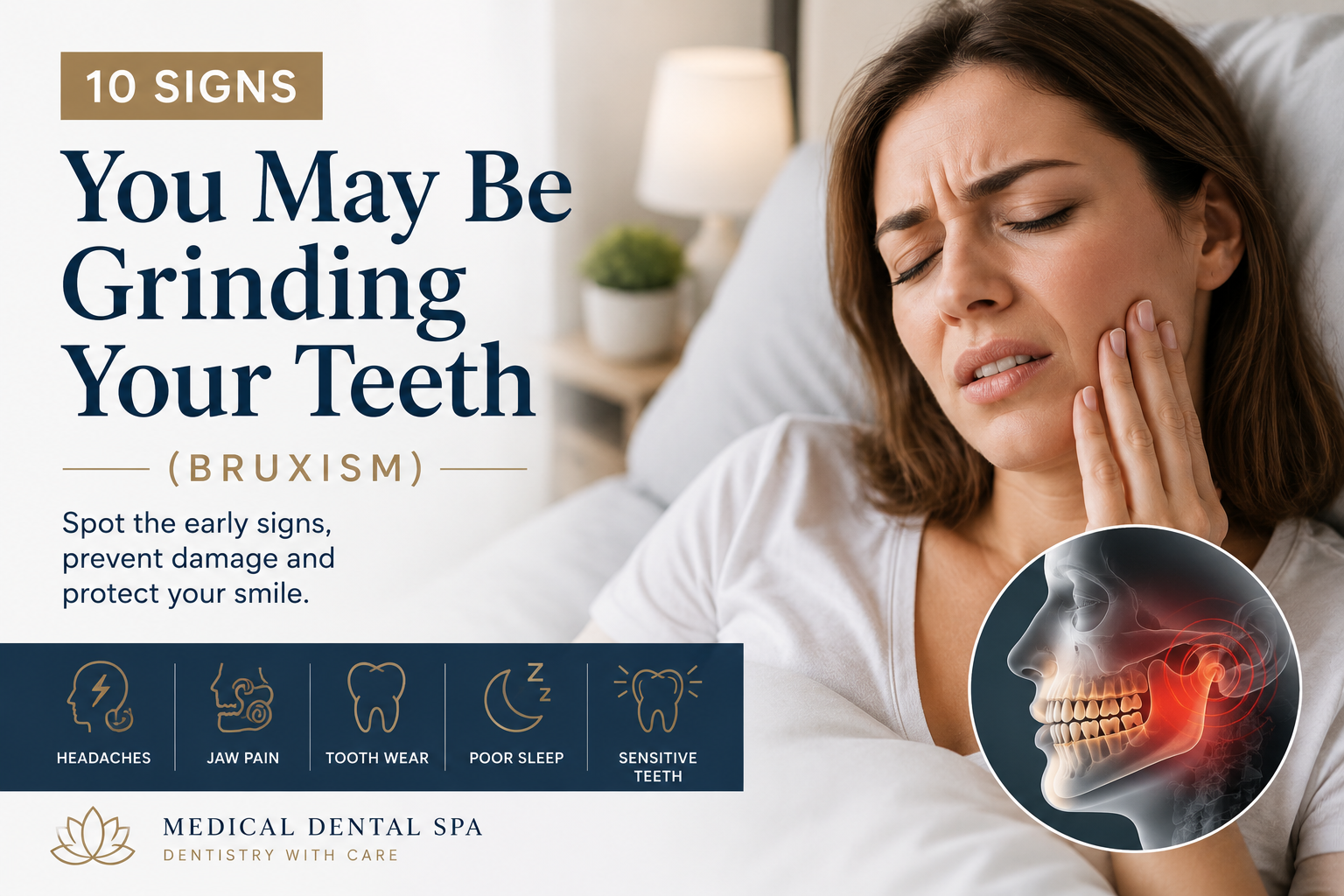
10 Signs You May Be Grinding Your Teeth (Bruxism)
Common Signs of Teeth Grinding (Bruxism)
10 Signs You May Be Grinding Your Teeth. Most people expect to notice if they grind their teeth, but surprisingly, many are completely unaware they do it. Teeth grinding, also known as bruxism, often happens during sleep, making it difficult to recognise until symptoms begin to appear. Others may clench their teeth during the day without realising it, especially when concentrating, exercising or dealing with stressful situations.
Although occasional grinding is unlikely to cause lasting harm, persistent bruxism can gradually wear down the teeth, strain the jaw muscles and place excessive pressure on the joints that allow your mouth to open and close. Left untreated, it may lead to cracked teeth, damaged fillings, tooth sensitivity, headaches and ongoing discomfort that affects your quality of life.
Bruxism can affect people of all ages and is more common than many realise. In some cases it is linked to stress or anxiety, while in others it may be associated with sleep disorders, an uneven bite or lifestyle factors such as excessive caffeine or alcohol consumption. Because the symptoms often develop slowly, many patients only discover the problem during a routine dental examination when signs of tooth wear become visible.
The good news is that early diagnosis can help prevent more serious damage. Your dentist can identify the signs of grinding before they become painful or expensive to repair and recommend treatments that protect your teeth while addressing the underlying cause.
Below are ten of the most common signs that may indicate you are grinding or clenching your teeth.
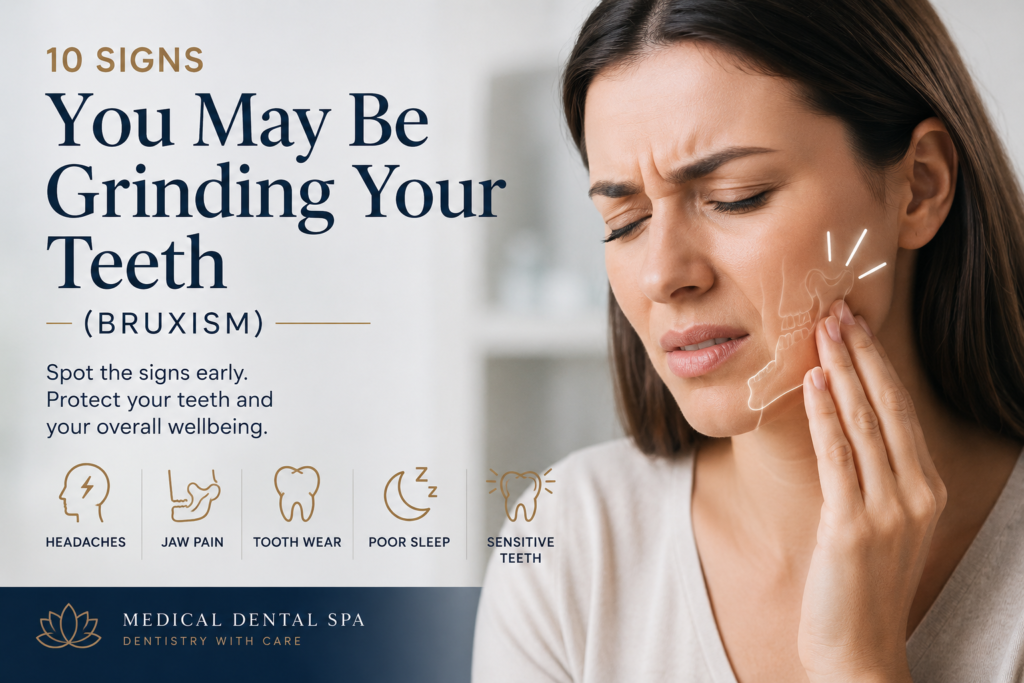
10 Signs You May Be Grinding Your Teeth
1. You Frequently Wake Up with Headaches
Morning headaches, particularly around the temples, are one of the most common symptoms of sleep bruxism. Overnight clenching places prolonged tension on the muscles around the jaw and scalp, which can result in dull headaches that gradually ease as the day progresses.
2.Your Jaw Feels Tight or Sore
If opening your mouth first thing in the morning feels uncomfortable, or your jaw muscles ache after waking, excessive clenching may be responsible. Overworked muscles can become fatigued in much the same way as any other muscle in the body after strenuous exercise.
3.Your Teeth Look Shorter or Flatter
One of the clearest clinical signs of long-term grinding is gradual tooth wear. The biting surfaces slowly become flatter, making teeth appear shorter than they once were. This type of wear cannot be reversed naturally.
4. Your Teeth Have Become More Sensitive
As enamel wears away, the softer layer beneath, known as dentine, becomes exposed. This can cause discomfort when eating or drinking hot, cold or sweet foods and beverages.
5. You Have Chipped or Cracked Teeth
Teeth are incredibly strong, but repeated grinding creates constant pressure that can eventually cause small fractures or chips. Existing fillings and crowns may also become damaged.
6. Your Partner Hears Grinding Noises at Night
Many people discover they grind their teeth because a partner hears the distinctive scraping sound while they sleep. This is one of the strongest indicators of sleep bruxism.
7. Your Fillings or Crowns Keep Breaking
If dental restorations repeatedly fracture without an obvious reason, excessive bite forces caused by grinding may be contributing to the problem.
8. You Notice Indentations Along the Sides of Your Tongue
Repeated pressure from clenching can leave small scalloped impressions around the edges of the tongue. Although not always caused by bruxism, it is a sign dentists commonly look for during an examination.
9. Your Jaw Clicks or Makes Popping Sounds
Grinding and clenching place additional strain on the temporomandibular joints (TMJ). Some patients notice clicking, popping or stiffness when opening and closing their mouth.
10. Your Teeth Feel Tired After Waking Up
Many patients describe an unusual sensation where their teeth feel tender or “worked out” in the morning. This often results from several hours of unconscious clenching during sleep.
What Causes Teeth Grinding?
There is rarely a single cause of bruxism. Instead, it is often influenced by a combination of physical, emotional and lifestyle factors.
Common contributing factors include:
- Emotional stress and anxiety
- Poor-quality sleep
- Sleep disorders such as obstructive sleep apnoea
- An uneven bite
- Missing teeth
- Certain medications
- Excessive caffeine intake
- Smoking
- Alcohol consumption
Identifying the underlying cause helps determine the most appropriate treatment and may reduce the likelihood of further tooth damage.
Can Teeth Grinding Be Treated?
Yes. Treatment depends on the severity of the condition and its underlying cause.
Your dentist may recommend:
- A custom-made night guard to protect your teeth during sleep.
- Replacing damaged fillings or crowns where necessary.
- Correcting bite problems if they are contributing to excessive pressure.
- Advice on reducing stress and improving sleep habits.
- Regular dental examinations to monitor tooth wear.
Many patients notice significant improvement once the problem has been identified and managed early.
Frequently Asked Questions
Is teeth grinding common?
Yes. Bruxism affects both adults and children and is particularly common during sleep. Many people are unaware they grind their teeth until a dentist notices signs of tooth wear.
Can stress make teeth grinding worse?
Yes. Emotional stress is one of the most common triggers for daytime clenching and night-time grinding. Learning effective stress management techniques may help reduce symptoms.
Can children grind their teeth?
Yes. Many children grind their teeth while their mouths are developing. In many cases the habit disappears naturally, although persistent grinding should still be assessed by a dentist.
Can teeth grinding permanently damage teeth?
Yes. If left untreated, prolonged grinding may wear away enamel, crack teeth, damage fillings and increase tooth sensitivity.
Will a mouth guard stop me grinding my teeth?
A custom-made night guard will not necessarily stop the grinding itself, but it helps protect your teeth from further damage and reduces excessive pressure on the jaw.
Does teeth grinding always happen during sleep?
No. Some people grind or clench their teeth while awake, often during periods of concentration or stress, without realising they are doing so.
Can teeth grinding cause earache?
Yes. The jaw joints are located close to the ears, and muscle tension caused by bruxism can sometimes be mistaken for ear pain.
How is bruxism diagnosed?
Your dentist will examine your teeth for signs of wear, fractures, muscle tenderness and changes in your bite. They will also discuss your symptoms and medical history before recommending treatment if required.
Protect Your Smile Before Small Problems Become Bigger Ones
Teeth grinding often develops gradually, meaning many people do not notice the damage until it has already affected their teeth or jaw. The earlier bruxism is identified, the easier it is to protect your smile and avoid more complex treatment in the future.
If you’ve noticed any of the signs mentioned above, or you’ve been waking with headaches, jaw discomfort or increasing tooth sensitivity, a professional dental examination can help identify the cause. At Medical Dental Spa West Hampstead, our experienced team can assess your teeth, look for early signs of wear and recommend the most appropriate treatment to keep your teeth healthy for years to come.
Whether you require a routine dental check-up or have concerns about teeth grinding, we’re here to help with personalised care in a welcoming environment, seven days a week. (Opening Hours:
Monday – Friday: 9am – 8pm
Saturday: 9am – 7pm
Sunday: 10am – 7pm)