

Dental FAQs in West Hampstead

Welcome to the
Medical Dental Spa
Frequently Asked Dental Questions (FAQ)
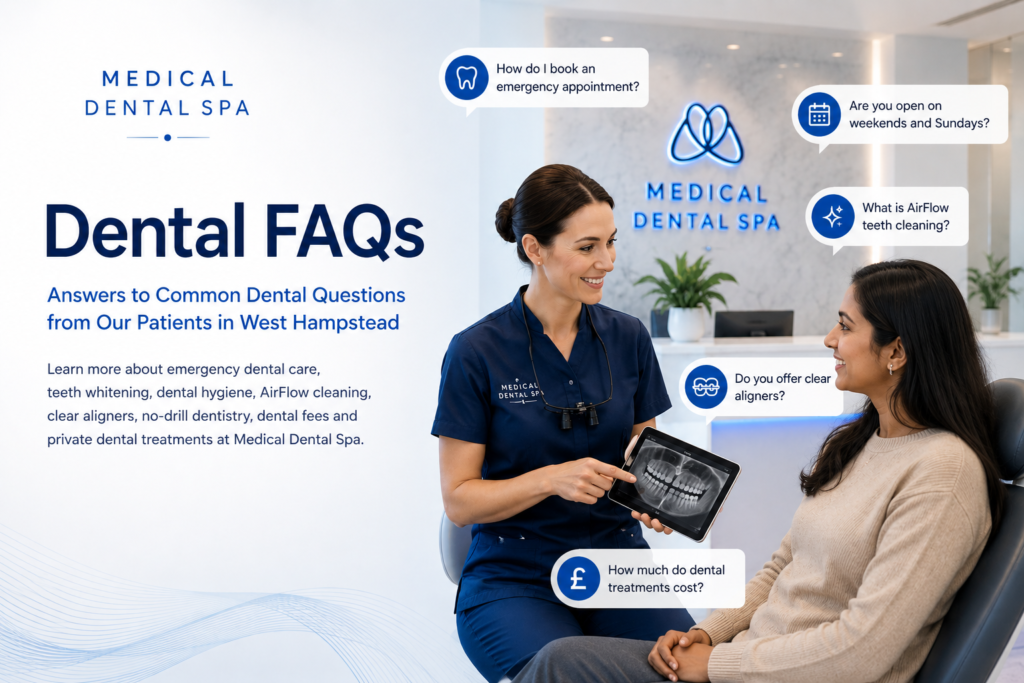
Looking for answers about emergency dental care, teeth whitening, dental hygiene, clear aligners, dental prices or treatment options? Below you’ll find answers to some of the most common questions asked by patients at Medical Dental Spa in West Hampstead.

Quick Navigation Menu
Emergency Dentist in West Hampstead
Can I book an emergency dentist appointment today?
Yes. We offer same-day emergency dental appointments whenever availability allows.
Do you treat severe toothache?
Yes. We assess the cause of pain and recommend appropriate treatment options.
Can you repair a broken tooth?
Yes. Depending on the damage, treatment may include bonding, fillings, crowns or temporary repairs.
What should I do if a filling falls out?
Avoid chewing on the affected side and contact us as soon as possible for an assessment.
Are emergency appointments available on Sundays?
Yes. Medical Dental Spa is open 7 days a week, including Sundays.
What counts as a dental emergency?
A dental emergency includes severe toothache, swelling, a knocked-out or broken tooth, uncontrolled bleeding, dental trauma, lost crowns or fillings causing pain, and infections that require urgent treatment.
Can I be seen the same day?
Whenever possible, we offer same-day emergency appointments for patients experiencing dental pain, trauma or other urgent dental problems. We recommend calling us as early as possible to check availability.
What should I do if my tooth has been knocked out?
Handle the tooth by the crown (not the root), gently rinse it if dirty and, if possible, place it back into the socket. If this isn’t possible, keep it in milk or saliva and contact us immediately. Quick treatment gives the best chance of saving the tooth.
What if I break a crown, bridge or veneer?
If your restoration becomes loose or breaks, avoid chewing on the affected side and book an emergency appointment. In many cases, it can be repaired or replaced quickly.
Can you treat dental abscesses?
Yes. Dental abscesses require prompt assessment because untreated infections can spread and become more serious. We’ll examine the cause of the infection and recommend the most appropriate treatment.
Should I go to A&E for a dental emergency?
Most dental emergencies are best treated by a dentist. However, if you have severe facial swelling affecting your breathing, heavy uncontrolled bleeding or significant facial trauma, you should seek immediate medical attention or attend your nearest Accident & Emergency department.
What can I do to relieve toothache before my appointment?
Until you can be seen, keep the area clean, avoid very hot or cold foods if sensitive, and take pain relief as directed by your pharmacist or GP if appropriate. Avoid placing aspirin directly on the gum.
Do you accept new patients for emergency appointments?
Yes. You do not need to be an existing patient to book an emergency dental appointment at Medical Dental Spa. We welcome both new and existing patients requiring urgent dental care.
Can children be seen for dental emergencies?
Yes. We provide emergency dental care for both adults and children. If your child experiences dental trauma, severe pain or swelling, contact us as soon as possible for advice and an appointment.
What happens during an emergency dental appointment?
Your dentist will examine the affected tooth or area, discuss your symptoms, take X-rays if necessary and provide pain relief or emergency treatment. If further treatment is required, we’ll explain your options and arrange any follow-up appointments.
⭐ Bonus FAQ
Why choose Medical Dental Spa for emergency dental care?
Medical Dental Spa provides prompt emergency dental appointments, experienced clinicians, transparent treatment fees and weekend availability. Our patient-focused approach ensures you receive fast, professional care to relieve pain and protect your long-term oral health.
Dental Check-Ups & General Dentistry
How often should I visit a dentist?
Most patients benefit from a check-up every six months.
What is included in a dental examination?
Your examination may include assessment of teeth, gums, soft tissues and X-rays if required.
Can I book as a new patient?
Yes. We welcome new patients.
Do I need a check-up before cosmetic treatment?
Yes. A dental examination is recommended before whitening, bonding or aligner treatment.
Can dental problems be detected early?
Regular examinations help identify issues before they become more serious.
Can I eat before a dental check-up?
Yes. Unless you’ve been given specific instructions for a particular procedure, you can eat and drink normally before your appointment. Brushing your teeth beforehand is always recommended.
How long does a routine dental examination take?
Most routine dental check-ups take around 20–30 minutes, depending on your oral health and whether X-rays or additional assessments are required.
Why are regular dental check-ups important?
Regular examinations help identify tooth decay, gum disease and other oral health problems early, often before they become painful or require more extensive treatment.
What happens if the dentist finds a problem?
If we identify any concerns during your examination, we’ll explain our findings clearly, discuss your treatment options and provide a personalised treatment plan before any work begins.
Do I need dental X-rays at every visit?
Not always. Dental X-rays are only taken when clinically necessary to help diagnose problems that cannot be seen during a visual examination.
What should I bring to my first appointment?
If you’re a new patient, it’s helpful to bring details of any medications you take, relevant medical information and a list of any concerns or questions you’d like to discuss.
How can I prepare for my dental examination?
Brush and floss your teeth before your appointment and let your dentist know about any pain, sensitivity, swelling or changes you’ve noticed since your last visit.
What if I haven’t visited a dentist for several years?
There’s no need to worry. We welcome patients who haven’t seen a dentist for some time and provide a friendly, judgement-free environment focused on improving your oral health.
Can children have routine dental check-ups?
Yes. Regular dental examinations are important for children to monitor the development of their teeth, encourage good oral hygiene habits and detect any problems early.
⭐ Bonus question
Why choose Medical Dental Spa for your dental check-up?
Our experienced dentists provide thorough examinations using modern technology in a relaxed, patient-focused environment. We welcome new patients, offer transparent fees, weekend appointments and personalised dental care for the whole family in West Hampstead.
Dental Hygiene, Guided Biofilm Therapy & AirFlow Cleaning
What is AirFlow cleaning?
AirFlow is an advanced stain and biofilm removal treatment using air, warm water and fine powder.
Is AirFlow better than a traditional scale and polish?
Many patients find AirFlow more comfortable for stain removal.
Does AirFlow remove coffee and tea stains?
Yes. It is very effective at removing surface staining.
How often should I see a hygienist?
Usually every 3–6 months depending on oral health.
Can hygiene treatment help bleeding gums?
Yes. Professional cleaning often helps reduce gum inflammation.
Is AirFlow cleaning suitable for sensitive teeth?
Yes. AirFlow is generally gentler than traditional polishing and many patients with sensitive teeth find the treatment more comfortable. Your clinician will always tailor the treatment to your individual needs.
What is Guided Biofilm Therapy (GBT)?
Guided Biofilm Therapy is a modern approach to professional dental hygiene that combines biofilm detection, AirFlow technology and gentle ultrasonic cleaning to remove plaque, stains and harmful bacteria while preserving healthy tooth surfaces.
Can AirFlow remove smoking stains?
Yes, it is highly effective at removing many surface stains caused by smoking, coffee, tea and red wine, helping restore a cleaner, brighter smile.
Does AirFlow whitening my teeth?
It does not whiten the natural colour of your teeth, but it removes external stains and biofilm, making your smile appear noticeably brighter and cleaner
Is AirFlow cleaning safe for dental implants?
Yes, it is suitable for cleaning around dental implants, crowns, veneers and orthodontic appliances when performed by a trained dental professional
Can AirFlow be used with braces or Invisalign?
Yes, it is an excellent option for patients wearing braces or clear aligners, helping remove plaque and staining from areas that are often difficult to clean at home.
How long does an AirFlow hygiene appointment take?
Most AirFlow hygiene appointments take approximately 30–60 minutes, depending on the amount of plaque, staining and the overall condition of your teeth and gums.
Do I need a dental check-up before booking hygiene treatment?
Not always. If you’re an existing patient with recent dental records, you may be able to book directly. New patients may require an examination first so we can assess your oral health and recommend the most appropriate treatment.
Can professional hygiene treatment help prevent gum disease?
Yes. Regular professional cleaning removes plaque and biofilm that contribute to gum disease, helping keep your gums healthy and reducing the risk of future dental problems.
What should I do after an AirFlow hygiene treatment?
Continue brushing twice daily, clean between your teeth every day and try to avoid strongly coloured foods and drinks for a few hours after treatment to help maintain your freshly cleaned smile.
⭐ Bonus FAQ
Why choose Guided Biofilm Therapy instead of a traditional hygiene appointment?
Guided Biofilm Therapy uses advanced EMS AirFlow technology to identify and gently remove biofilm, plaque and surface stains with greater comfort and precision than many traditional cleaning methods. It is ideal for patients looking for a modern, minimally invasive approach to maintaining excellent oral health.
Professional Teeth Whitening in West Hampstead
Is teeth whitening safe?
Yes, when supervised by a dental professional.
How long does whitening last?
Results vary, but many patients enjoy results for 1–3 years with maintenance.
Can crowns or fillings be whitened?
No. Whitening only affects natural teeth.
Do I need a consultation first?
Yes. We assess suitability before treatment.
Can I have whitening on Sundays?
Subject to availability, yes.
Which teeth whitening treatment is right for me?
The best option depends on your goals, lifestyle and the current shade of your teeth. During your consultation, we’ll recommend the most suitable professional whitening treatment for your smile.
Is professional teeth whitening better than over-the-counter products?
Yes. Professional teeth whitening uses clinically approved whitening gels and customised treatment plans, providing safer, more predictable and longer-lasting results than many shop-bought products.
Will teeth whitening make my teeth sensitive?
Some patients experience temporary tooth sensitivity during or shortly after treatment, but this usually settles within a few days. We can recommend products to help minimise sensitivity if needed.
How white can my teeth become?
Results vary from person to person depending on the natural colour of your teeth and the type of staining present. Most patients notice a significantly brighter, more natural-looking smile.
Can smokers have their teeth whitened?
Yes. Teeth whitening can improve staining caused by smoking, although continuing to smoke after treatment may reduce how long your results last.
What foods and drinks should I avoid after whitening?
For the first 24–48 hours after treatment, it’s best to avoid strongly coloured foods and drinks such as coffee, tea, red wine, curry and berries, as your teeth may be more prone to staining during this period.
Can I whiten my teeth if I have sensitive teeth?
In many cases, yes. During your consultation, we’ll assess your oral health and recommend the safest whitening option based on your individual needs.
How often can I whiten my teeth?
Professional teeth whitening should only be repeated when clinically appropriate. Many patients simply maintain their results with occasional top-up treatments as advised by their dentist.
Can I have my teeth whitened before a wedding or special event?
Yes. Many patients choose professional whitening before weddings, holidays or important occasions. We recommend booking your consultation several weeks in advance to achieve the best possible results.
Why choose professional teeth whitening at Medical Dental Spa?
Our dentists provide safe, clinically supervised teeth whitening using professional products tailored to your smile. Every treatment begins with a comprehensive dental examination to ensure whitening is suitable and to help you achieve natural-looking, long-lasting results.
⭐ Bonus FAQ
How long does professional teeth whitening take?
Treatment times vary depending on the whitening system used. After your consultation, we’ll explain the process, expected treatment duration and how to maintain your brighter smile for as long as possible.
Clear Aligners, Invisalign® & Teeth Straightening
What are clear aligners?
Clear aligners are removable trays that gradually move teeth into position.
How many hours a day should I wear them?
Typically around 22 hours daily.
Are aligners painful?
Most patients experience mild pressure rather than pain.
How long does treatment take?
Treatment length varies according to complexity.
Will I need retainers afterwards?
Yes. Retainers are essential to maintain results.
Can adults have clear aligners?
Yes. Clear aligners are a popular option for adults who want to straighten their teeth discreetly without traditional metal braces.
Are clear aligners suitable for teenagers?
In many cases, yes. Following a consultation, we’ll assess whether clear aligners are the most appropriate orthodontic treatment based on the patient’s age, dental development and individual needs.
Can I remove my aligners to eat and drink?
Yes. Clear aligners should be removed before eating or drinking anything other than water. This helps protect both your aligners and your teeth.
How often will I need to change my aligners?
Most patients change to a new set of aligners every one to two weeks, depending on their personalised treatment plan.
How often will I need to visit the dentist during treatment?
Regular review appointments are usually scheduled every six to eight weeks so your dentist can monitor your progress and ensure your teeth are moving as planned.
Can clear aligners fix crowded or crooked teeth?
Yes. Clear aligners can successfully treat many cases of crowding, spacing and mild to moderate bite problems. During your consultation, we’ll determine whether they’re suitable for your smile.
What happens if I lose an aligner?
Contact us as soon as possible. We’ll advise whether you should wear your previous aligner, move to the next one or arrange a replacement to keep your treatment on track.
Will clear aligners affect my speech?
Some patients notice a slight lisp when they first begin wearing aligners, but this usually improves within a few days as you become accustomed to them.
How should I clean my clear aligners?
Clean your aligners daily using lukewarm water and a soft toothbrush or the cleaning products recommended by your dentist. Avoid using hot water, as it may distort the plastic.
Why choose clear aligners at Medical Dental Spa?
Our experienced dentists create personalised treatment plans using advanced digital technology to achieve predictable, natural-looking results. We guide you throughout every stage of treatment to help you achieve a healthier, straighter smile with confidence.
⭐ Bonus FAQ
Am I suitable for clear aligner treatment?
Most adults and many teenagers are suitable candidates for clear aligners. The best way to find out is by booking a consultation, where we’ll assess your teeth, bite and smile goals before recommending the most appropriate treatment.
No Drill Dentistry & Early Tooth Decay Treatment
What is no drill dentistry?
A minimally invasive approach aimed at treating very early decay without traditional drilling.
What is Curodont?
Curodont is an enamel regeneration treatment used for selected early lesions.
Can cavities be treated without drilling?
Some very early lesions can be managed without drilling.
Does Curodont replace fillings?
No. It is not suitable for established cavities.
Why is early diagnosis important?
It increases the chance of preserving natural tooth structure.
Should I whiten my teeth before ICON?
In many cases, whitening may be recommended before ICON if you want a brighter overall shade. This is because ICON blends the white spot with your current tooth colour.
Is ICON better than veneers?
For small or moderate white spots, ICON is usually considered before veneers because it is much less invasive. Veneers may be considered for more complex cosmetic cases.
Can No Drill Dentistry prevent fillings?
In many cases, yes. When tooth decay is detected at a very early stage, minimally invasive treatments may help stop or reverse the process, reducing the need for a traditional filling.
Who is suitable for No Drill Dentistry?
No Drill Dentistry is ideal for patients with early enamel changes, white spot lesions or very early tooth decay. During your examination, your dentist will determine whether you’re a suitable candidate.
Is No Drill Dentistry painful?
No. Most No Drill Dentistry treatments are completely comfortable and do not require injections or traditional drilling, making them ideal for nervous patients.
How is early tooth decay detected?
Early tooth decay is identified during a dental examination using visual assessment, digital X-rays when required and modern diagnostic techniques that help detect problems before they become cavities.
What is the difference between Curodont and ICON?
Curodont is designed to support enamel regeneration in selected early decay lesions, while ICON Resin Infiltration improves the appearance of white spot lesions by blending them with the surrounding enamel. Your dentist will recommend the most appropriate treatment based on your diagnosis.
Can children benefit from No Drill Dentistry?
Yes. Early intervention is particularly beneficial for children because it can help protect developing teeth, reduce the need for future treatment and encourage positive dental experiences.
Does No Drill Dentistry replace regular dental check-ups?
No. Regular dental examinations remain essential because early detection is the key to identifying problems before they require more invasive treatment.
How long does a No Drill Dentistry appointment take?
Treatment times vary depending on the procedure being performed, but most appointments are completed within 30–60 minutes.
Is No Drill Dentistry suitable for nervous patients?
Yes. Because many treatments avoid drilling, injections and extensive tooth preparation, No Drill Dentistry is often an excellent option for patients who feel anxious about visiting the dentist.
Why choose No Drill Dentistry at Medical Dental Spa?
We combine modern diagnostic technology with minimally invasive treatment techniques to help preserve healthy tooth structure whenever possible. Our patient-focused approach aims to detect problems early, reduce unnecessary drilling and support long-term oral health.
⭐ Bonus FAQ
Can No Drill Dentistry be combined with Guided Biofilm Therapy and ICON Treatment?
Yes. Many patients benefit from a preventive approach that combines professional hygiene, early diagnosis, ICON White Spot Treatment and minimally invasive techniques such as Curodont. Your dentist will create a personalised treatment plan based on your oral health and smile goals.
Dental X-Rays, OPG X-Rays & CBCT Scans
What is an OPG X-ray?
A panoramic X-ray showing teeth, jaws and surrounding structures.
What is a CBCT scan?
A 3D dental scan used for advanced diagnosis and planning.
Are dental X-rays safe?
Yes. They use very low doses of radiation and are only taken when clinically justified.
Do I need a scan before implants?
Often yes.
Can I be referred for a CBCT scan?
Yes. We accept referral patients.
Why do I need a dental X-ray?
Dental X-rays allow your dentist to detect problems that may not be visible during a routine examination, including tooth decay between teeth, infections, bone loss and impacted teeth.
What is the difference between an OPG X-ray and a CBCT scan?
An OPG X-ray provides a two-dimensional panoramic image of your teeth and jaws, while a CBCT scan creates a detailed three-dimensional view used for more complex diagnosis and treatment planning.
When is a CBCT scan recommended?
A CBCT scan may be recommended for dental implants, wisdom tooth assessment, root canal treatment, complex extractions, orthodontics or investigating jaw conditions.
How long does a CBCT scan take?
The scan itself usually takes less than one minute, although your appointment may last around 10–15 minutes to allow for preparation and image review.
Will I feel anything during a CBCT scan?
No. CBCT scanning is completely painless, non-invasive and does not involve any injections or physical contact with your teeth.
Are dental X-rays safe for children?
Yes. Dental X-rays are only taken when clinically necessary and use very low levels of radiation. Your dentist will always assess whether an X-ray is appropriate for your child.
Can I have a CBCT scan if I am pregnant?
If you are pregnant or think you may be pregnant, please let your dentist know. X-rays and CBCT scans are only taken during pregnancy when the clinical benefits clearly outweigh any potential risks.
Can I eat and drink before a CBCT scan?
Yes. There are usually no special preparations required before a CBCT scan unless your dentist provides specific instructions.
Can my dentist send me for a CBCT scan?
Yes. Many dentists refer patients for CBCT imaging when advanced diagnosis or treatment planning is required. Medical Dental Spa accepts referrals for CBCT scans from other dental practices.
How quickly will I receive my scan results?
Your dentist will review the images as part of your consultation and explain the findings, discussing any recommended treatment options and next steps.
⭐ Bonus FAQ
Why choose Medical Dental Spa for dental imaging?
Medical Dental Spa uses modern digital imaging technology to provide fast, accurate diagnosis and treatment planning. Whether you require an OPG X-ray or a CBCT scan, our experienced team will ensure your imaging is carried out safely, comfortably and only when clinically necessary.
Dental Implants, Crowns & Missing Teeth
How do I know if I need a dental implant?
If you have lost a tooth and have healthy gums and sufficient jawbone, a dental implant may be an excellent long-term solution. During your consultation, we’ll assess your oral health and discuss the most suitable treatment options.
Is a dental implant better than a bridge?
Both treatments can replace missing teeth, but they work differently. Dental implants replace the tooth root and help preserve the jawbone, while bridges are supported by neighbouring teeth. Your dentist will recommend the option best suited to your needs.
How long do dental implants last?
With good oral hygiene and regular dental check-ups, dental implants can last for many years and often for decades. Routine maintenance plays an important role in their long-term success.
Can anyone have dental implants?
Most healthy adults are suitable candidates. However, factors such as gum disease, smoking, certain medical conditions or insufficient bone may affect suitability. A detailed assessment will determine whether implants are right for you.
How should I care for a dental implant?
Dental implants should be brushed and cleaned daily, just like natural teeth. Regular hygiene appointments and routine examinations help keep the surrounding gums healthy.
What is the difference between a crown and a filling?
A filling repairs a smaller area of damaged tooth, whereas a crown covers and protects the entire visible part of the tooth when it has become weakened or extensively restored.
When is a dental crown recommended?
Crowns are commonly recommended after root canal treatment, for badly damaged teeth, large broken fillings or to restore the strength and appearance of a tooth.
Can missing teeth affect my oral health?
Yes. Missing teeth can affect your bite, chewing ability, speech and confidence. Over time, neighbouring teeth may move, and the jawbone in the area can gradually shrink if the tooth is not replaced.
What options are available to replace missing teeth?
Depending on your individual needs, options may include dental implants, bridges, partial dentures or full dentures. Your dentist will explain the advantages of each treatment.
Can I eat normally after replacing a missing tooth?
Once treatment has been completed and healing is complete, most patients can comfortably return to eating a wide variety of foods. Your dentist will advise you on any temporary dietary restrictions during recovery.
Can I replace a missing tooth years after losing it?
Yes. Many patients replace missing teeth months or even years after extraction. Before treatment, your dentist will assess your gums and jawbone to determine the most suitable option. In some cases, additional procedures such as bone grafting may be recommended before placing a dental implant.
Will replacing a missing tooth improve my smile?
In many cases, yes. Replacing a missing tooth can restore the appearance of your smile, improve your confidence, support your facial profile and make speaking and eating feel more natural.
Are dental implants painful?
Dental implant treatment is carried out using local anaesthetic, so the procedure itself is generally comfortable. Most patients describe the recovery as easier than expected, with mild discomfort that usually settles within a few days.
⭐ Bonus FAQ
Can a missing tooth cause other dental problems?
Yes. Even a single missing tooth can affect your oral health over time. Nearby teeth may gradually shift into the empty space, changing your bite and making it more difficult to clean between your teeth. This can increase the risk of tooth decay, gum disease and uneven tooth wear. Replacing a missing tooth with a dental implant, bridge or denture can help restore your smile, improve chewing and support your long-term oral health.
Appointments, Fees & New Patients
How much is a new patient examination?
Our latest treatment fees are available on our dedicated Fees page. If you have any questions, our team will be happy to explain the costs before your appointment.
How much is an emergency appointment?
Emergency appointments start from £90.
Are treatment plans provided before treatment begins?
Yes. If treatment is required, we’ll discuss all available options and provide a personalised treatment plan with a clear estimate before any work is carried out.
Do you accept new patients?
Yes. We are always pleased to welcome new patients for routine, cosmetic and emergency dental care.
How can I book an appointment?
You can book online, call the clinic or contact us via WhatsApp.
Are there any hidden charges?
No. We believe in transparent pricing and will always explain the cost of your treatment before you decide to proceed.
Can I spread the cost of my treatment?
For larger treatment plans, please speak to our team about the payment options currently available.
Can I book online?
Yes. Our online booking system allows you to arrange many appointments at a time that’s convenient for you. You can also contact the practice by phone or WhatsApp if you need assistance.
Can I change or cancel my dental appointment?
Yes. If you need to reschedule or cancel your appointment, please let us know as early as possible so we can offer the appointment to another patient.
Do you offer weekend appointments?
Yes. Medical Dental Spa is open seven days a week, including Saturdays and Sundays, subject to appointment availability.
Do you offer weekend appointments?
Yes. Medical Dental Spa is open seven days a week, including Saturdays and Sundays, subject to appointment availability.
What payment methods do you accept?
We accept a range of convenient payment methods. Please contact the practice if you have any questions about payment before your appointment.
How long does a typical appointment last?
Appointment times vary depending on the type of treatment. Routine examinations generally take around 20–30 minutes, while more complex procedures may require longer appointments.
⭐ Bonus FAQ
Why choose Medical Dental Spa?
Medical Dental Spa combines experienced dentists, modern technology, transparent treatment fees and a patient-first approach to provide high-quality dental care in West Hampstead. We welcome new patients and offer flexible appointments, including weekends, to make dental care as convenient as possible.