
Dental Crowns and Dental Bridges: What Are They and When Do You Need One?
If a tooth becomes damaged, weakened, or missing, modern dentistry offers several ways to restore your smile and protect your oral health. Two of the most common treatments are dental crowns and dental bridges.
Although they may sound similar, they serve different purposes. In this guide, we’ll explain what crowns and bridges are, when they are recommended, and how they can help restore both function and appearance.
What Are Dental Crowns?
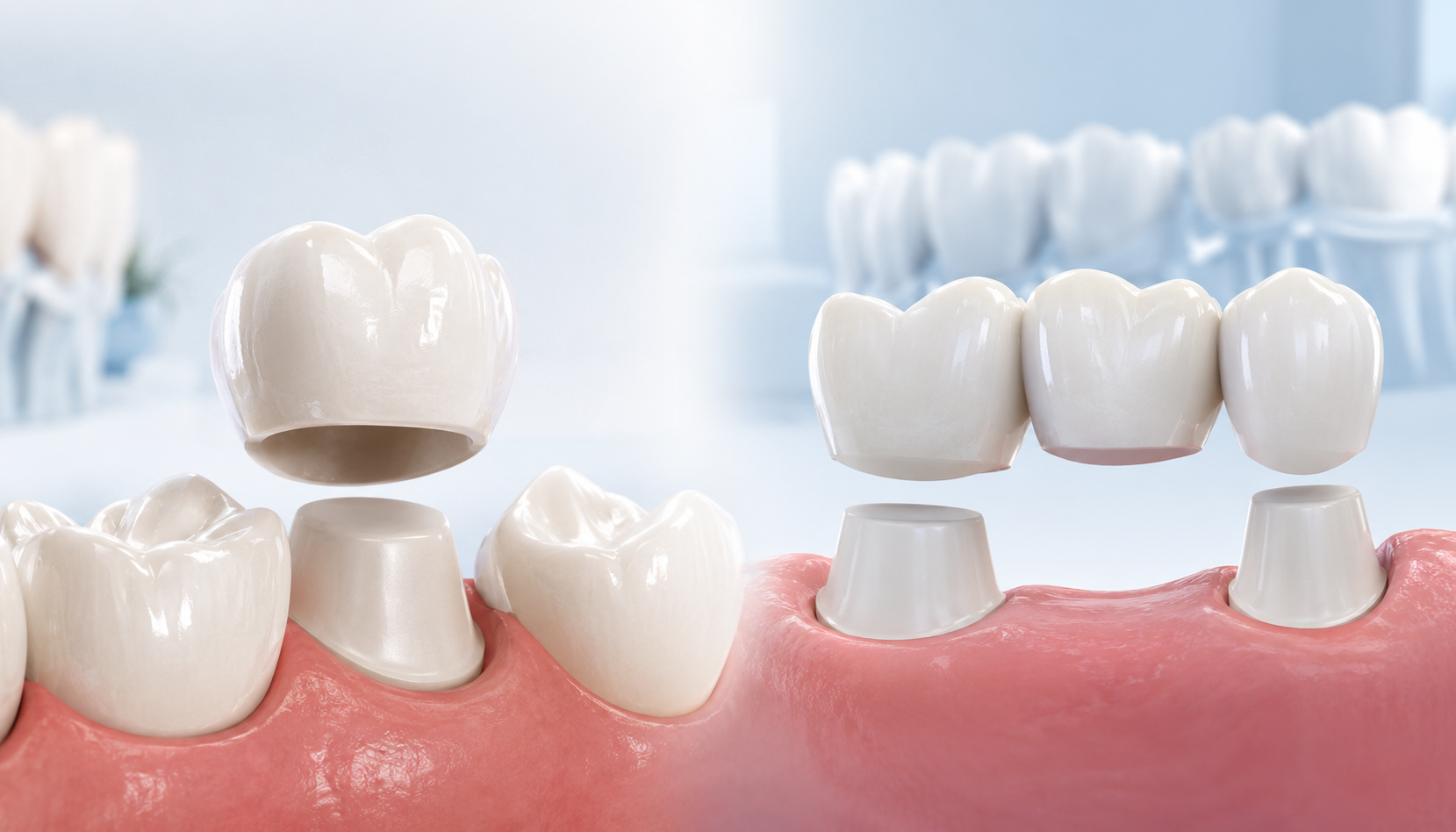
A dental crown is a custom-made cap that fits over a damaged or weakened tooth. It is designed to restore the tooth’s shape, strength, and appearance while protecting it from further damage.
A crown completely covers the visible part of the tooth above the gum line, making it look and function like a natural tooth.
When Do You Need a Dental Crown?
Your dentist may recommend a crown if you have:
- A tooth that is badly broken or cracked
- A large filling that no longer provides enough support
- A tooth weakened by decay
- A tooth that has had root canal treatment
- A worn-down tooth caused by grinding
- A misshapen or discoloured tooth that affects your smile
Crowns help preserve natural teeth and can often prevent the need for extraction.
How Is a Dental Crown Made?
The process usually takes two appointments.
During the first visit, the dentist prepares the tooth by removing any damaged areas and shaping it to fit the crown. An impression or digital scan is then taken and sent to a dental laboratory.
A skilled dental technician uses this information to create a custom crown that matches the size, shape, and colour of your surrounding teeth.
At the second appointment, the crown is fitted and permanently bonded to the tooth.
In some cases, modern digital technology allows crowns to be designed and made more quickly.
What Materials Are Used for Dental Crowns?
Modern crowns can be made from several materials, including:
Porcelain and Ceramic
These are the most popular options for visible teeth because they closely resemble natural tooth enamel.
Zirconia
Zirconia crowns are extremely strong and durable while still offering a natural appearance.
Porcelain Fused to Metal (PFM)
These crowns have a metal core covered by porcelain. They have been used successfully for many years but are becoming less common as newer materials provide better aesthetics.
Gold and Metal Alloys
Metal crowns are very durable and can last for many years. They are usually used for back teeth where appearance is less important.
Traditional Dental Crowns vs Modern Dental Crowns
In the past, many crowns contained a metal framework covered with porcelain. While these crowns were strong, they could sometimes show a dark line near the gum as the gums naturally changed over time.
Modern crowns are often made entirely from ceramic or zirconia. These materials offer several advantages:
- More natural appearance
- Better light reflection, similar to natural teeth
- No visible metal edges
- Excellent strength and durability
- Improved biocompatibility
As a result, modern crowns can provide a more lifelike and attractive smile.
How Long Does a Dental Crown Last?
With proper care, a dental crown can last between 10 and 15 years, and many last even longer.
The lifespan depends on factors such as:
- Oral hygiene
- Regular dental check-ups
- Teeth grinding habits
- Diet and lifestyle
- The material used
Brushing twice daily, cleaning between your teeth, and attending routine dental examinations can help maximise the life of your crown.
What Are Dental Bridges?
A dental bridge is a fixed restoration used to replace one or more missing teeth.
A dental bridge fills the gap left by a missing tooth using an artificial replacement tooth that is supported by the natural teeth or dental implants on either side.
The replacement tooth literally “bridges” the gap, which is where the name comes from.
When Do You Need a Dental Bridge?
A Dental bridge may be recommended if:
- One or more teeth are missing
- You want a fixed alternative to a removable denture
- The neighbouring teeth are healthy enough to support the bridge
- You want to restore chewing ability and appearance
Replacing missing teeth is important because gaps can allow neighbouring teeth to drift out of position, which may affect your bite and oral health.
How Is a Dental Bridge Made?
The teeth on either side of the gap are carefully prepared and used as supports for the bridge.
Impressions or digital scans are taken and sent to a dental laboratory, where the dental bridge is custom-made.
Once completed, the bridge is securely fitted and bonded into place.
The result is a natural-looking restoration that helps restore both appearance and function.
What Is the Difference Between a Crown and a Bridge?
Although crowns and dental bridges may look similar, they are used for different purposes.
Dental Crown
- Covers and protects an existing tooth
- Strengthens a damaged or weakened tooth
- Restores the appearance of a single tooth
- Used when the tooth is still present
Dental Bridge
- Replaces one or more missing teeth
- Fills the gap left by missing teeth
- Uses neighbouring teeth or implants for support
- Used when a tooth is missing
Simply put, a crown saves a damaged tooth, while a bridge replaces a missing one.
Are Dental Crowns and Dental Bridges Comfortable?
Yes. Both crowns and bridges are designed to feel natural and comfortable in your mouth.
After a short adjustment period, most patients quickly forget they are there and enjoy improved confidence when eating, speaking, and smiling.
Looking After Your Dental Crown or Bridge
Good oral hygiene is essential for keeping your restoration in excellent condition.
We recommend:
- Brushing twice daily with fluoride toothpaste
- Cleaning between your teeth every day
- Attending regular dental check-ups
- Avoiding chewing very hard objects such as ice or pens
- Wearing a night guard if you grind your teeth
Book a Consultation
If you have a damaged tooth or are missing one or more teeth, our experienced team can help you explore the most suitable treatment options.
At Medical Dental Spa, we provide modern crown and bridge solutions designed to restore your smile, improve comfort, and protect your long-term oral health.
Contact us today to arrange a consultation and find out which option is right for you.